skip to main |
skip to sidebar
By Bruce McCulloch
The British sports car? Err, yeah, what about it?
Well, it shouldn’t come as any surprise that the world of the classic English sports car is in absolute shambles. And truthfully, it’s been on the descent for the last some three decades now. Putting aside the great impact of the Jaguars, Triumphs, the MGs and the Healeys through the 50’s, 60’s and 70’s, it would appear that overall, the specialty-manufacture British sports car has never managed to get any lasting footing in the market. And in the last couple of years, small manufacturers such as TVR and Marcos have had to close their shops due to insufficient funding and high production costs.
And though this situation isn’t exclusive to English sports car manufacturers, it must be noted that it happens an awful lot in Britain. In most cases it would appear that by the time the car is actually put into production, the typical company itself has little to fall back on in the way of resources and therefore is not able to withstand even the smallest of financial storms.
Additionally, the fact that most English sports manufacturers have the reputation of producing cars that are notoriously unreliable certainly doesn’t help to paint a proper (and healthy) image.
But what if you wanted to have something both built and designed in Britannia, but without the common downfalls of shambling quality, infrequent reliability and terrible engineering? Well, in that case, there are a few exceptions. The first being a fantastic vehicle called the Invicta S1 As I happily noted in the article, this is one of the very few English sports cars which manages to “do it all” correctly and beautifully.
Though, as good as the Invicta may be, it’s most definitely not the absolute best of Britannia. Oh no, that prestigious award rightly belongs to a company established in Dorset, England in 1995. The company is called “Ascari”, and their vehicles are not only amongst the best supercars from the United Kingdom, but in the world.
And like many great marques before it, the company has a substantial amount of history behind its nameplate. Had you not already guessed, the name was in fact named in tribute after one of the greatest racing car drivers in the world, the great Spaniard, Alberto Ascari.
Prior to the company actual selling its first production vehicle on the market, Ascari had released a concept car called the “FGT” sometime in 1995. Powered by a Chevrolet Corvette 6.0 litre V8 and styled by Lee Noble (who is now both owner and sole designer of the “Noble” Automotive) it was clear that the company meant serious business.
And shortly thereafter, Norwegian entrepreneur Klaas Zwart – now the sole owner of the company - took great notice of the vehicle and realized its possible potential in the racing scene. And as a result, he took the leap to help fund the company and not only ensure it’s entry into the “FGT” racing class, but ultimately, entrance into the British GT Championships. And it all paid off extremely well, when Zwart – behind the wheel of the FGT, now powered with a Ford V8 – managed to win an event at the Silverstone circuit in the vehicle’s debut season. Following that, the car continued to telegraph it’s greatness when in the British GT Championships of 1997, the vehicle finished a respectable fourth place at Donington Park.

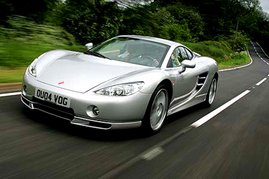
Ascari Ecosse
So then it should be no surprise that after a couple of years of racing success, the company then decided it would look at producing the FGT racing car as a full fledged, road-legal sports car. This eventually lead to Ascari renaming the “FGT” the “Ecosse” and replacing the Chevrolet and Ford V8 engines for a series of BMW V8 power plants with tuning development from Hartge. Earlier Ecosse models had a 4.4 litre 8-cylinder with around 300bhp, while later models benefited from a slightly larger 4.7 lire V8 with around 400bhp; the latter of the two was running naught-to-sixty in 4.1 seconds and boasting a top speed somewhere in the region of “200” mph.
And if technology is what you were looking for, then the fact that the Ecosse production vehicle boasted an aluminium space frame chassis under its all fibre glass body should have made most any sports car techies very happy.
Yet despite all of this promise, only seventeen examples were known to exist; eight of the original seventeen are now said to have been destroyed through racing or as a result of crashes by their private owners.
This transitional period was the time frame in which the Norwegian-born Klaas Zwart decided the he'd take up the Herculean task of actually purchasing the company. He did this, although not without some difficulty, and from thereon, Mr. Zwart's mission was clear: build something not only completely new to the company's image, but ultimately, something truly great. And after some testing with a concept called the "KZ1" in early 2003, the company released its first production supercar some time in 2005.
The first and most notable aspect of the KZ1 is unquestionably the way it looks. While some feel it's too introverted and even lacking in character, I couldn't disagree more. The really interesting thing about the KZ1's design is how cleanly executed it is, in fact. From it's swooping headlamps (which are in fact borrowed from that of a garden-variety Peugeot) to it's compact rear-end with it's quad circular tail lamps and low-set spoiler, it looks more at home in the Porsche factory than at the Ferrari factory; definitely more Carrera GT than Enzo if you catch my drift. I think it's just wondrous - not only compact and clean, but beautiful in all aspects of its design elements.


And there's little doubt that its interior follows the same overall design theme as it's exterior. Rather than being all flashy and flamboyant, the interior of the KZ1 is all about keeping things luxurious and simple, while undoubtedly showing a high degree of sporting intent. And unlike the vast amount of specialty sports car manufacturers - from Britain and elsewhere - the KZ1's interior is not an awful parts bin with shabby quality and an ugly-duckling design. It's clear that once into the interior, engineers and designers aimed at keeping it high-class in nearly all respects, while retaining a special degree of bespoke individuality. Sure, there are few notable and noticeable borrowed parts - such as the Audi TT air vents, the Vauxhall VX220 starter button and the Mercedes-Benz SL55 AMG tacho/speedo - but thankfully, it all looks integrated, and just as thankfully, none of which look cheap. Suffice to say, achieving such a high-quality interior with multiple bespoke parts is not an easy target. It certainly doesn't help to keep the production costs down either, but for Mr. Zwaart, such expense was not an issue. He knew from the start that should he take this company under his belt, there would be no cutting corners.
And in that aspect alone, the Ascari is not your typical supercar. It's not about being brash and over the top, it's about traveling in a style which is understated but still radiates style.
Yet, despite its contrarian philosophy amongst the supercar clan, it's engine is exactly what you'd expect from a true thoroughbred. Further improving upon their connection with BMW for their motors, Ascari was afforded the 5.0 litre 8-cylinder engine previously found in the BMW E39 M5 to power their supercar. It's an engine that in even in standard-build features variable valve timing, 400bhp and needless to say, top-notch engineering. The version in the KZ1 isn't completely standard though - this particular version of the engine has been beefed up for an extra 100bhp bringing the total tally to 500bhp, while the redline has increased from a meaty factory-spec 7k rpm to a screaming 8k rpm. All in all, you can be sure it makes for an entertaining drive, and with its snarling metallic howl, one that's guaranteed to bring a smile to the face of most any enthusiast.


And if performance is your breathless desire, then you need not to worry, the some 1400kg (fully loaded) KZ1 can sprint to 60 mph in just 4.1 seconds, clatter 100 in a little over 8.5 seconds and can easily breach the double-ton.
It all sounds marvellous, but of course, the real test of how good a car actually is translates unequivocally to how it drives on the road. Well, you needn't worry there, either, because the overwhelming consensus (our editor in that number) is that it's fantastic. The positive press from magazines never seems to differ. They all say the exact same thing - the car handles with premium precision; zero roll and pitch. The steering is quick, but not intensely so. EVO Magazine was quoted as saying: "there are hints of Esprit Sport 350 in its clean, crisp and tightly controlled roll and pitch, and as Lotus engineers were involved in the car's development this shouldn't come as a surprise". Its AP-sourced brake calipers do their job so well in terms of fending off any wear and tear, and it's suppleness through it's finely tuned chassis makes for an confidence-inspiring drive. In fact, that's where the KZ1's character comes to light. Unlike the vast majority of supercars which have a tendency to bite back, the Ascari manages to always stay controlled and well-planted; rarely does it feel as if it's going to spin out of control. It manages to bring the great goods without the touchy-feely attitude expected of most vehicles in this class. It is the opposite of temperamental, and in fact, is confidence-inspiring. It feels like it’s just not going to put a foot down wrong anywhere.
The overall result gives the car a feeling quite unlike anything else. And with the great confidence the car gives through its ability, it makes the car easier to control at the absolute limit – you don’t feel as if the car is conspiring to catch you out on every hard corner. And the track times it's achieved thus far certainly help to back that point up. When EVO magazine tested the car on the Bedford Autodrome earlier last year, it had little trouble keeping up with the best of them. And when Top Gear got their mitts on the KZ1 last year, it ran a lap time on their circuit just a few tenths behind that of the 600bhp Porsche Carrera GT. Its compact size and power-to-weight tactility truly make it a threatening force on any track.
So then, it would appear that the KZ1 is all marvellous and it's true, there are indeed very few categories where it does not succeed in being brilliant. But of course, no car is perfect and the Ascari's biggest vice happens to be its staggering price tag. In the United Kingdom, the vehicle will set you back - thanks to its various bespoke parts, exclusivity and carbon fibre body - £235,000. Now, at first glance that's not too bad considering a Pagani Zonda costs in excess of £400,000, but then reality sets in: the Pagani Zonda has an additional 100bhp to boot. That being said, the KZ1 is probably best compared against vehicles such as the Ferrari F430, Lamborghini Gallardo and Porsche 911 GT2. And after that, it doesn't take long to see the real issue at hand; those three vehicles offer the same power (if not more) and don't even breach £150K. And if you're willing to pay a tad under £200k, which is still quite a bit less than the KZ1, then you can have Lamborghini's flagship - the Murcielago LP640 - which boasts 640bhp (a full 140 more than the English Ascari). The KZ1 is not the pounds-to-performance value leader, that’s for certain.
Though, if you want extra power, and you have a generous trust fund, you can always go with the KZ1's alter ego, named the "A10".

In all intents and purposes, the A10 is essentially a KZ1 on a steady regimen of steroids. As is rather obvious, the vehicle is clearly based upon the KZ1, though is undoubtedly more shout-out-loud and head-turning in its looks. Whereas the KZ1 is calmly executed in its exterior styling, this super-exclusive version (just 50 are planned, with a price tag of £350,000) of the A10 is clearly aimed at clientele who wish they were really racing car drivers. With a low-set front end spoiler, a rather interesting pair of racing-like stripes, a fixed rear spoiler and an undertray more fitting on a race car than on a road car, it's clear that this is a different type of Ascari.
And the interior certainly re-affirms that. Rather being about bespoke luxury, the interior of the A10 is is no way apologetic for lacking any creature comforts. It's a race car equipped with a digital tachometer, an ugly steel steering wheel and patches of unfinished metals and carbon fibre around the cabin. So, it shouldn't come as any surprise that this particular version is not only lighter than the standard item, but considerably more powerful. With a kerbweight of tad under 1300kg collectively working with 600bhp, Ascari claims the A10 will hit the sixty mph mark in a shade under 3.0 seconds.
Now I must admit, I had a slight bit of reservation about this car when I first heard about it. Naturally, I had assumed that when Ascari made the 10, that they'd lose much of engineering finesse that the KZ1 had showcased, but it turns out that I was quite wrong (and happily so)!
The initial press reactions to the car were that it is indeed more hardcore, brash and loud, but that the vehicle hasn't lost any of its overall abilities. Despite the fact that it weighs as just about as much as a loaf of bread, and has a ride decisively more hardcore than the standard model, it still seems to offer the same driving ease. Suffice to say, it’s amazing that they've been able to do such a great blend of performance and driver-friendliness, and only further proves how much work has been put into their vehicles. Ridiculously expensive or not, they're truly wonderful. And that's all that matters to their lucky owners.
Oh, and did I mention that the A10 absolutely murdered every other car Top Gear has ever tested on their test track? (Koenigsegg’s and Zonda’s included). Just thought it might be important.
>>> http://www.ascari.net/
 By Bruce McCulloch
The 1960’s and the 1970’s were quite simply a wondrous time for enthusiasts. Especially for those who were looking for a classic British drop-top and in light of such, MG, Austin-Healey, Triumph and others offered vehicles which sated those sports car addictions.
The problem is, very few current British manufacturers have been able to succeed at creating anything with a similar philosophy, or additionally, the impact of those great originals. Let’s be honest, if you’re looking for any sports car that is truly British, you’re going to be sorely disappointed. Even the all-encompassing Aston Martin isn’t a real ‘Brit’ anymore, neither is Rolls Royce, nor Bentley and if you’re absolutely determined to find something all-English, you’ll end up with TVR, who happens to make some of the most unreliable vehicles on the earth (and who also happen to be going down the toilet). The Morgan, of course, is an English motoring icon, but many of its components come from somewhere else at this point. The Morgan certainly qualifies as maintaining the intent of the British sportscar, but it was in a sparsely-populated category of just a few cars until recently.
Anyhow, you’re taking on a Herculean task at finding a real British sports-car these days, but that doesn’t mean you won’t find some others, like the Morgan, that at least genuinely invoke the true spirit of the British sports-car.
With that segue, I bring you the brand-new ‘Invicta S1’ - a car which just might fill the appetite of any true British sports car enthusiast. The first question might be, how so? Well, resurrecting an old brand is always a interesting (and sometimes effective) way to bring the customers in and as Canadian-born Tony Stelliga resurrected Marcos; wealthy businessman Malcolm Bristow has invested his own money into ‘Invicta’ hoping to recreate the glory days of a company which went bankrupt in 1933.
The original origins of this company hark back to 1925, when Sir Noel Campbell Macklin (a British racing driving hero among other things) decided he wanted to create a vehicle which would not only encompass the history of the British, but also a vehicle which would match the best of them from America. With that in mind, and with the able assistance of his sister-in-law, Miss Violet Cordery, Sir Macklin was able to push Invicta to many glorious achievements. With Cordery at the helm (who was a talented driver herself) of a 3-litre Invicta racecar, the Invicta was able to break a total of four world records and thirty-three Italian racing records at Monza (for their respective category).

With that being noted, you would expect the newly released ‘S1’ to carry the tradition of the brand’s heritage and I honestly think they’ve done a splendid job at doing so.
Bristow explains he was always a fan of the marque and its stylish S-Type sports racer and in order to recreate the glory days, he wants the ‘new’ Invicta to live up to their original slogan: "The Most Wonderful Performance in the World".
In order to do so, Bristow knew he needed a car which would not only serve it’s purpose as a performance vehicle, but also as a grand tourer – something which would truly live up to the 4.5 litre ‘Tourer’ of 1928. With that, the requirements for a GT (especially an Invicta model) demanded good visibility, good ergonomics; a large trunk, a large fuel tank, as well as ground-breaking technological features which enhance its performance. The Invicta rebirth project officially started in the mid 2000’s, and by the time late 2006 arrived they had completed a vehicle which they believed was worthy of the original name plate.
For starters, the S1’s designer (Leigh Adams) was asked to reach back into Invicta’s heritage and style a car with timeless lines and classic cues, but of course – easier said than done. Without a doubt, the S1’s design provokes mixed reactions. Some love it and some don’t, but for the record - I reckon it looks pretty damn excellent.
I’m not sure what the majority of car enthusiasts will relate it to, but British car magazine EVO was quoted as saying it looked like “a melted Aston Martin”. Without a doubt I can see what they’re talking about. The whole vehicle seems quite reminiscent of the ’99 Aston Martin Vantage 600. From a rear-end point of view, there’s most certainly a degree of current-generation Maserati coupe, and, did you happen to notice that the tail-lamps come directly from the last-generation Volkswagen Passat?


The interior is yet another styling aspect of this car which will invoke different reactions. Evident is the attempt at recreating the ‘classic British GT’, but what is also noticeable is the use of the outsourced Ford air vents which grace the centre console. Nonetheless, it’s got everything you need (and probably want) in a GT car. Items such as a: heated front and rear window screen, electric windows, Recaro seats with electrical operation and heating, SatNav and Radio/CD are all standard on the S1.

One thing that’s guaranteed to deceive automotive enthusiasts who haven’t seen the Invicta in person is the sheer size of this vehicle. In photos it all looks rather normal - rather Porsche 911-sized. However, it isn’t. The side-to-side size of the car is just huge. Just as an example, due to the enormous width of the S1, Invicta can easily modify the rear bulkhead for an extra two seats for customers who wish to travel four-up.
When I say “enormous width”, just how enormous is it, you might ask? For comparison, the Invicta is a few inches shorter than a Porsche 997 Carrera S in terms of length, but at 84.0 inches wide across the back, the Invicta is not only wider than most other cars on the market, but also wider than most cars, period. A 997 Carrera is a mere 71.2 inches wide, a Porsche Carrera GT is 75.6 inches in width and even the Lamborghini Murcielago (which is considered among the widest of roadcars at 80.4 inches) is easily covered by the massive rump of the Invicta. This could be Sir Mix-a-Lot’s favourite ride.
Now, as I mentioned in a previous article, I feel that one of the major reasons for the various bad things that have been happening with TVR is the philosophy of keeping them ‘all-Britannia’ (i.e., no outsourcing). With that criticism in mind, I am glad to see that Bristow has done much outsourcing, but unlike some of the others in this segment, not for the sole reason of saving every penny. The outsourcing contracts which have occurred have all been given to companies which high credibility and well known quality, and have not been awarded on a “low-bid” basis. For instance, the gorgeous 5-spoke alloys have been outsourced by an Italian company by the name of ‘APP’ – this well respected firm also makes the alloys on the Pagani Zonda F (a mid-engine, 600bhp Italian exotic). Meanwhile, the big braking system has been outsourced from well known ‘AP’, who has customers like Aston Martin, etc.
The determination to bring only high quality to Invicta’s customers is further evident to the discerning observer as the entire body of this vehicle is made from carbon fibre and consists of an inner and an outer moulding; meanwhile, the floor pan and under tray combined with the bulkheads have all been built as a single massive component. The carbon fibre itself has been bonded to a steel space frame chassis consisting of 40mm square section steel tubing; including a tubular steel roll cage which allows a complete chassis weight of only 160kg. The entire production process ensures the chassis has super rigidity and light construction. In fact, Invicta boasts (and rightly so) that the British government stated that the S1 has the strongest chassis they've ever tested.
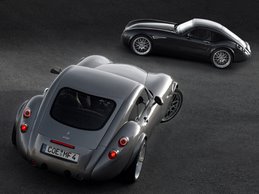
With that being noted, Invicta says the S1 is a super-lightweight GT. Still, at 1,380kg it isn’t exactly all that lightweight. On the positive side, it’s a good 40kg lighter than a Porsche 997 Carrera S, but sadly a massive 140kg heavier than a Wiesmann GT, another specialty sports car manufacturer.
This leads us to the next important aspects of the Invicta, the performance. For starters, there are three different models which one can purchase - the ‘S1-320’, the ‘S1-420’ and the ‘S1-600’. One thing that is guaranteed for all three is that you’ll be getting the same 4.6 litre V8 you find in the Ford Mustang. Such an engine was chosen as it boasts good reliability, excellent parts availability, it is just about burst-proof and you have the possibility of various tuning levels. The base model, (the ‘S1-320’) gets you exactly what the name suggests - 320bhp and backing that up is a hardy 300lb-ft of torque, all available down low if you want it, like most American V8 engines. With such power combined with its low kerbweight, Invicta claims 0-60 in just 5.0 seconds dead and with that, there’s no doubt this car will have no problem fighting off something along the lines of an Aston Martin V8 Vantage. If one feels such power to be insufficient, the doughty ‘S1-420’ and ‘S1-600’ have the added advantage of a supercharger and in turn, turn out 420bhp and 600bhp respectively – with the latter running 60 mph in just 3.8 seconds.

So, yes, this car sounds marvellously engineered; and very fast, but is it like a lot of specialty cars that require the driver to be a contortionist? Well, according to Sports Car International magazine, quite the opposite, except for some small positioning problems. Apparently, ingress to the S1 is just as easy as any other car; although unfortunately they felt the pedals were set up for drivers with extremely small feet (hey, just like the British cars of the Sixties!) and the fact that the super-wide transmission tunnel forces the driver to sit just a bit canted to the side detracts a bit from the driving experience. On another downside they felt the gas and the brake pedal are a little closely coupled together. This is definitely sounding more like a British sports car from the past, eh?
On the road though, they thought the S1 felt solid and extremely strong and even though they thought the width was intimidating, they were quoted as saying the handling was superb; the nose goes were you want and regardless of being power assisted, the steering feel was great and accurately weighted. They also praised the chassis which they thought was quite compliant and didn’t jiggle over bumps. All in all, when you’re driving quickly, it helps to have a car underneath you that was obviously built to be a confidence-inspiring GT car.
Aside from a few ergonomics issues it’s clear that the S1 is an alluring all-purpose coupe in standard fitment, and as stated before, if you want a bespoke 2+2, none of the attraction goes away. My biggest issue with the S1 is the MSRP (tax included) which starts at a whopping £106,000 for the S1-320 and £150,000 for the S1-600. Nonetheless, I think it’s an enticing car worthy of attention, particularly if want stunning performance that is coupled with a unique name and appearance.
By Bruce McCulloch
After the company’s rather recent revival in early 2000, English supercar manufacturer “Marcos Engineering”, has just announced that the company will be closing shop due to “insufficient profits”, “high cost bases” and a British pound which is falling and falling.
Mind you, this is far from the first time that Marcos has endured profit problems, and ultimately, bankruptcy. Originally founded in 1959 in Bedfordshire, England, by Jem Marsh and Frank Costin, the company enjoyed about a decade of success until problems with exporting the vehicles to North America led to dire financial issues which eventually forced the company into closing shop some time in 1971.
However, in 1976, Jem Marsh revived Marcos yet again, and in 1981, launched a kit-car called the “Marcos V6 Coupe”. Yet, that wasn’t without its fair share of faults too. In 2000, the company went bust yet again, but was eventually bought out by young Canadian electronic-tycoon, Tony Stelliga.
Under Stelliga’s regime, the company only boasted a line-up of two vehicles; the convertible TSO R/T, and hardtop TSO GT released early last year. As both were powered by Chevrolet’s Corvette 8-Cylinder, styled by Ex. TVR stylist Damian McTaggart, and co-engineered with racing supplier “Prodrive”, its clear Stelliga had great plans for the company’s future.

Though, even when Stelliga was at the helm, I’d by lying if I said the company hadn’t its faults. When Marcos released the TSO GT in 2006, the company founder promised their vehicles would make great alternatives to TVR’s, but with added durability and reliability thanks to the Chevrolet motors. But despite the hard work from Tony Stelliga and his company, Marcos cars hadn’t gained any real improvements overall, although the engines were indeed burst-proof. But that was the best part of the cars; in fact the car themselves were often plagued with poor fit and finish, choppy reliability and a driving experience on the left side of death’s sickle; choppy, unpredictable, dangerous and thus scary to take to the limit.
Yet despite all of this, I can’t shade my disappointment regarding this news. Faults and all, I loved Marcos automobiles. They had such an abundance of interesting character to them. Sports car enthusiasts worldwide will miss ‘em.
 It’s not often that you hear the words “awful” and “supercar” in the same sentence. Actually, finding the word “awful” to describe a “supercar” is about as rare as finding someone who actually likes the repugnance of a Pontiac Aztek.
And it’s no wonder why, when purchasing a $200,000 automobile, the last thing you obviously expect is for it to be awful. But of course, there are those exceptions; those exceptions which manage to slip through the factory gates without a shred of engineering excellence - a dud, a lemon if you will.
Thankfully, there are few of these wallet-crushers which could be described as being awful, but I’ve got one for you – there is no supercar as awful as the Aston Martin Vanquish. Here and now, we’ll take a look at what made the Vanquish so awful; its tribulations, its downfalls, its cost-saving operations.
After a some-ten-year life-time span of Aston’s flagship, the DB7, the time eventually came when with the help of Ford Motor Co. It was time to release a new vehicle. Something which would be able to compete with the average 21st century supercar; something which would have the brute power, the technology and the style to make it a true thoroughbred. Trouble is, the Vanquish was (and has) never been anything like that. And despite its bold name – which means to “annihilate or “forcibly subdue” – the Vanquish did quite just the opposite. It was never daring, never class-leading and seriously compromised because of Aston’s cash flow at the time.
The first of many problems was the styling, which as it was often criticized for being overly adventurous for an Aston. Designed by Ian Callum, designer of the DB7 and the new Jaguar XK, the Vanquish (apparently inspired by the DB4GT Zagato) was not smooth like the DB7, but more blatant – more aggressive, flashier. Of course, this is subjective and not a real problem per se, but this was an often-stated criticism of the Vanquish. Personally though, I could never concur. I always thought the Vanquish was always a great looking car - perhaps not as finely stated as the DB7, but still interesting and modern without alienating Aston Martin’s classical design philosophy.


Exterior preferences aside though, the Vanquish’s first of many downfalls was always its interior. Those who had previously been acquainted with Aston’s had come to know and love their rich and vicarious all-English thematic styling elements - the affluent and over polished woods, the hand stitched leather and well, the 20th century cabin architecture. And though such specific traits were often criticism of such vehicles as the DB7 and the Virage, it ultimately made them Astons. That’s what Aston’s were, until the Vanquish arrived.
Unlike previous Aston Martins which were really like stepping into a 19th century drawing room, engineers and designers had tried – with their limited resources – to make the Vanquish interior luxurious, as well as modern. Unfortunately, the results didn’t pan out as one had hoped. With the Vanquish there was no rich woods to be found, oh no, just a sculpted console supposedly formed with aluminium, or so they say. Instead of being classical Aston, the Vanquish’s interior was always a sub-par item; not good looking, nor well built. The centre console being the worst example with its vast array of Ford parts bin pieces – cheesy and tactless buttons, awful air vents, and an audio and climate system obviously borrowed from that of a much lesser automobile. So, the approximately $200,000 Aston Martin was noticeably shabby. Suffice to say, such was not expected from a marquee of such high stature.
Amazingly though, that’s not even the Vanquish’s real vice. The biggest of downfalls with the Vanquish was undoubtedly with its mechanicals. Like the engine for instance, which was essentially two Ford Mondeo Six’s lashed together. Though that’s not the real issue here, the real issue was the fact that the engine had 450bhp and some 400lb-ft of torque. Respectable figures at the time of its release, but it looks as it was all a little too late. The same year Aston released the Vanquish, Ferrari released an updated version of Maranello, the 575M. With a price tag near identical to the big Aston and an engine featuring 520bhp and 414lb-ft of torque, the Vanquish looked to be living in the stone-age. Mind you, that’s without even mentioning the 6.2 litre 580bhp Lamborghini Murcielago with a price tag also near identical to the Aston. So, pretty much from its release the Aston was over-priced, underpowered and cheaply assembled.
As a result, its straight line performance was always mostly inadequate. With an average 0-100 km/h (62 mph) sprint between 5.0 and 5.5 seconds, the Vanquish just wasn’t matching its similarly-priced competition, let alone a $90,000 Mercedes-Benz SL55. Also contributing to poor acceleration was a gargantuan kerbweight and what is arguably the worst sequential transmission ever built; the latter being the greatest criticism of the Vanquish. The first and foremost trouble was that the Magneti Marelli system featured no automatic mode like that of a DB9, or a Ferrari 599 GTB Fiorano. In the Vanquish, the only way to change gears was with the paddles and even that would be ok if they had just worked properly. All throughout the Vanquish’s life the transmission was always an unbelievable afterthought; it didn’t respond quickly to gear changes - often delaying upwards of two seconds. It was jerky, noisy and above all else, faulty.


Now, I know what exactly you’re thinking – “well, performance isn’t everything, how about the general driving experience”?
Well, you’d think that after a cheaply assembled interior, a faulty transmission, mediocre performance and a large kerbweight not much else could be worse, but you’d be wrong. The brakes proved to be under-sized, inadequate and likely to starting fading after a few laps on the track. And the handling, oh boy, where do you we start? The true essence of an Aston has never demanded precise handling (making a nose-heavy Aston Martin go fast was always a muscular achievement), but with the Vanquish you would have expected some sort of advancement. This was untrue though – the car was sloppy, uncontrollable and over-sized. Simply put, it just couldn’t pull its weight through the corners. And so on and so forth, the Vanquish proved to be just a big lug with lousy footwork. But in 2004, the Vanquish faced its hardest competition yet; the company’s newly released DB9. Borrowing upon the Vanquish’s 12 cylinder motor and general styling theme –albeit closer to the DB7 - the DB9 did everything better than the Vanquish. It was just as powerful, it was a tad faster; it was better-handling and certainly much better built. It’s transmission… actually worked. In short, it was everything the Vanquish should have always been, and with a price tag undercutting the Vanquish by a lump sum of some $50,000, there was now little point in purchasing the flagship.
Aston made note of this immediately and in 2005, released the “Vanquish S”. What was an apparently reworked Vanquish though, was just a pin-up. Despite featuring a supposedly “reworked transmission”, it still changed gears like a 16 year old using a manual for the first time. And despite a 70bhp power increase, tests revealed the car to have straight line performance more or less identical to that of the first Vanquish. In fairness and thanks to a stiffened chassis, it was said to handle better than the first generation though.
So here we are, in 2007, looking back at the vast mistake which the Vanquish was. A $200k dud. A mistake, an afterthought – a car which never lived up to being called a supercar, let alone an “Aston Martin”. Thankfully, the big Aston is no longer wasting factory space as it’s been discontinued, and rightly so. Long live the new DBS.