skip to main |
skip to sidebar
 By Bruce McCulloch
Suffice to say, it’s an interesting moment in time for the Japanese motor company that is Toyota. Never in their some-60 year history has the company ever had such recognition. As most enthusiasts are already aware, Toyota is now the world’s biggest automotive manufacturer, and much of this can attributed to Toyota’s great value as automobiles, consistency of goods, but ultimately, their quality and reliability.
But of course, not all things can last and with Toyota’s stratospheric growth over the last decade or so, the company now has to contend with a series of appalling growing pains. Through the 90’s for instance, Toyota was a company with more or less of a spic-and-span clean reliability sheet. And not just overall reliability, but everything from quality to recalls. I’m not implying they were perfect by any means, but in contrast with today’s Toyota, they seemed to be miles ahead.
Obvious fault aside, not all is bad for enthusiasts of the brand. Oh no, in fact Toyota has been feeding us Toyota-nutters a decent dose of car-candy over the last couple years, and by that I’m referring to Toyota’s new aim/direction on sportiness. And as is well-known, sportiness –or the lack thereof – has always been a great criticism of company. Not anymore though, especially as it’s clear that Toyota of the future is aiming to capture the hearts and minds of more enthusiasts than they ever have before.
Now, of course, that’s not to say that Toyota’s history is completely oblivious of sporty cars. I need not remind anyone of such greats as the 2000 GT, nor the Celica, the Supra or the MR2. They’re cars which not only changed the general perception of Toyota as an automobile company, but contributed a great deal towards promoting the Japanese sports car.
Truth be told though, Toyota has most always stayed in the conservative arena in regards to developing sporty vehicles. Especially in comparison with not only rivals from around the world, but even fellow country manufacturers such as Nissan and Honda. And as we entered the ‘90’s, it was clear that Toyota had little, if any, intention of promoting the brand as anything to do with sport. As Lexus had just been introduced as the alternative to German luxury with the added kick of stronger reliability, Toyota its self concentrated on promotion of its bread and butter vehicles – the Camry and the Corolla to be specific.
In those years, focus and promotion of “sport” models slowly headed towards the bright light of death. The MR2, for instance, which had been known as a blistering go-kart with a seat-of-the-pants ride, turned into something much mushier with the release of the early 90’s generation. Whereas the late 80’s model had considerable focus on small dimensions and it possessed true sports-car genes, the MR2 Turbo was much more indolent in comparison. And it was the same story for the 90’s generation of the Supra. The MK2 of 1985, was tight, well-heeled and offered a great deal of road connection, whereas subsequent generations seemed to be ever-so dampened in regards to sport. Don’t get me wrong, both the MK3 of the late 80’s and MK4 of the early 90’s were indeed great cars, but it seemed as if the Supra was not only getting more powerful and bigger, but ultimately, becoming a grand touring vehicle. There’s little doubt that Toyota was purposely treating the 4th generation Supra as a higher force amongst the automotive world, when in my home country (nowhere other than the “Great White North”), the mid 90’s GT was a full $20,000 more expensive than the preceding model.

And yet, oddly enough, one of the Toyota’s most impressive “sport-oriented” vehicles was the one that looked to be the exact opposite – the “Cressida” (particularly the last generation -1988-1992). And the irony of that remains that the Cressida was always one of the brand’s most criticized vehicles; a vehicle often described as being both “tedious” and “nondescript”. In all fairness though, the Cressida’s exterior did very little to give anyone a clue as to what the car was really like. Though you need not take my word for it, just ask its owners who often referred to the car as “a 4 door Supra”. Although, in my honest opinion, the Cressida was actually the better of the two vehicles when it came to offering thrills. Not only because it was amazingly well balanced, but boasted a great deal of connection to the road; all in all, a Japanese BMW if you will.
And as the century came to a close, Toyota’s sporty line-up of vehicles became pretty much non-existent. Not only had the Supra since long been put out of production, but the MR2 had further turned into a hairdresser's fashion accessory with the sex appeal of a toad.
Additionally, Toyota had always been a company who had been quite conservative on power figures in the past. Whereas the Americans and the German’s had been a tandem of power wars, the Japanese auto firm always managed to stay in the background with very few of their vehicles breaching the 300bhp mark. Evidently, Toyota wanted nothing do with creating powerful and sporty cars, but that all was eventually to come to an end.
Fast forward to the turn of the 20th century, and you’ll notice Toyota is attempting to not so much as change its old ways, but create a new division of status to attract a new demographic of young and hip enthusiasts who are interested in sporty body kits and flashy bits of kit. Vehicles such as the Matrix, the Yaris and the FJ Cruiser are all evidence of this particular swing towards the direction of sport. Even the all new 2009 Corolla – arguably the most boring of all Toyotas – looks decisively more sporty now, much more than it ever has before.
And need I even remind anyone of Toyota’s lastest and hippest brand aimed purely at the youth of America, Scion? With Scion, Toyota has been able to create a car just for those crazy modification junkies who like to race, or, simply be seen as cutting-edge in the downtowns of our cities.
Lexus:
As has been evident by the lineup, Lexus has never been about being even the least bit sporty. In fact, Lexus has always been just the opposite – the brand for those who don’t care for sport and flash, but rather understated designs, seamless luxury and comfort. And why would anyone expect anything else when the company has built a very solid reputation on just that?
For the longest of time we had seen Lexus’ great reluctance to give their cars the proper power boosts they deserved. That all seemed to change however, with the release of the 2nd generation IS compact-saloon in early 2005. Whereas the 1st generation IS was a decent attempt at dethroning the BMW 3-Series, the subsequent generation has been a much stronger effort. It’s an effort which not only proved that Lexus could develop a vehicle that little bit closer to the 3-Series, but also one capable of out-gunning it; do take note that the 2005 IS350 was the first of the compact-saloons to possess over 300bhp.
Meanwhile, the introduction of the 4th generation LS flagship saloon has revealed that the company has now decided to bring their personal power game to a whole new level by allowing it not only breach the 300bhp mark (380bhp to be exact), but even the 400bhp mark with the LS600h (430bhp to be exact).
The Beginning of the sporty Lexus - The IS-F:

Thanks to Toyota’s hushed nature in regards to building sporty cars, there were a lot of folks who had (understandably) dismissed the idea of a true thoroughbred sports-saloon from Lexus. With the release of the 2008 IS-F however, Toyota’s engineers and determination cannot be faulted in any way.
As an enthusiast of the brand, I knew things were a little different this time around; in other words, none of that false “slap on a body kit and install a big engine thus eventually leading to slapdash, uninhibited handling”. It was clear that with addition of 14.2-inch Brembo brake callipers at the front end, 255mm Michelin tyres at the rear, BBS alloys and a suspension a full inch lower than the standard item that this IS was a serious effort. But of course, the question remained: would the IS-F be a true sports saloon, or just another hash attempt?
Initial doubts aside, the IS-F has done well to prove disbelievers wrong. Magazines from the colonies such as “Road & Track” and “Motor Trend” have had much praise to give this new super Lexus. Implying that it’s everything that one did not expect from a Lexus – it’s harsh, rough and angry while adding a degree of sporty finesse. One magazine described the car as being even too “hardcore” for the road – and remember, this is a Lexus we’re talking about here, not a Lotus. Yet other magazines have described the car as being truly hardcore, whilst still retaining a great deal of the brand’s usual road characteristics.
Meanwhile, even scores of European journalists –arguably the harshest of critics when it comes to Lexus vehicles – have given the IS-F a very fair amount of positive press.
The performance figures you ask? Since when was a Lexus capable of hitting naught-to-sixty in just 4.2 seconds (* Road & Track)? Never before is the answer, and that’s exactly what takes the company to a whole new level.
And that is all without even mentioning the interior, or the exterior design of the vehicle. Its little secret that Lexus’ are often criticized for their rather safe and understated designs, but the same cannot be said for the IS-F which manages to be aggressive throughout the entirety of its design detailing. Some even feel that the new super IS a bit too flashy for even a Lexus.
And what about the LF-A supercar expected to arrive some time in 2009? Watch out folks, watch out.
The obvious verdict being that things at Toyota are indeed changing, and in a manner which is very positive for enthusiasts. I’m not implying that Toyota will change its ways overnight, but its clear there’s a new direction for Toyota and affiliated on the horizon. As one of Toyota’s very biggest fans, I’m happy to see it and I am really very much looking forward to next few years of Toyota and Lexus products.
By Bruce McCulloch
I'm sure it's safe to assume that once as young ones, we all had childhood heroes. Some individuals had musicians or celebrities as their heroes, while the vast majority of us car enthusiasts had a certain automotive hero which we lusted like few things else. You know what I'm talkin' about, I'm talking about that one particular vehicle that from your childhood that was the car to have; it was a full obsession, something you talked about to friends and family at a seemingly endless rate and perhaps, even had posters of on your wall. It was even perhaps, the particular vehicle that made you the enthusiast you are today.
As enthusiasts we've all got at least one, or two of these vehicles. As for the particular vehicle, well, that's certainly going to depend on two factors: one, your age and two, when you got into cars. My Father for instance, also a rabid enthusiast, didn't get into automobiles until he was about 24 years old. His passion for the automobile was born by his both his own father, and his sister's husband. His Father was an all out car fan, and one who owned a whole host of American muscle - A Pink (what was he thinking?) Pontiac 440 LeMans, a Dodge Challenger amongst a whole other bunch of crazy tyre shredders. And his sister’s husband was no different; he also suffered from an automobile obsession having owned such vehicles as a Dodge Dart, a Triumph and even a little BMW 2002. So then it should be no surprise when I tell you that he now owns two Mercedes-Benz products; an E500 4Matic and a ML320 Cdi.
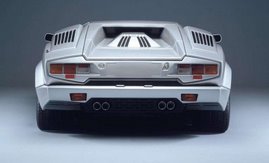
Overall though, it is more than likely your age defines your childhood automotive hero. For those with childhoods in the 60's and 70's your automotive hero is more likely to be such a vehicle as the Ford GT40 or Chevrolet Corvette rather than, let's say, one whose childhood was through out the 80's who lusted for such vehicles as the Lamborghini Countach and the Ferrari Testarossa.
As for myself, I like to believe that I was born, as Bill Ford would say, with petrol in my veins - in other words, a car enthusiast from birth. Though, while I was playing with Hot Wheels from a very young age, it wouldn't be a completely fair correlation to say I was die hard cast of my father from birth. It wasn't until I was about 8 or 9 years old when I started to show real interest in cars.
Two of my greatest automotive passions, Toyotas and supercars (odd couple, aren't they?), come from my very early years. My Toyota enthusiast genes were born from the fact that my Father has always had affection for Toyota automobiles. And no qualms, he has always been a Toyota enthusiast. Through out the '80's, he owned Celicas, a Supra and even, a rather rare Supercharged MR2. In the mid 90's however, my passion for Toyota products had further been fuelled by my father's purchase of an LS400 and shortly thereafter, an SC400. By the time I was about 9 years old, I was a fanatic and had the posters, the magazines and the car models to prove it.
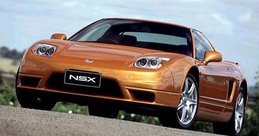
Late '95 was also quite a monumental time for me as it was the year when I became interested in supercars. And Honda, and their fabulous NSX, is who I have to originally thank. And of course, it didn’t hurt that my father also lusted after this Japanese wonder.
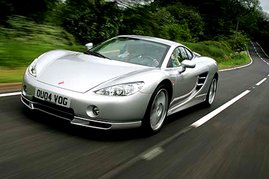
Though, my obsession with automobiles hit an all time high in 1996, at age 10, when a certain 350bhp 8-Cylinder English supercar was released. It had been on the market for some two decades already, but had previously never been available with an 8-cylinder engine. Any guesses? Well, this is it:

Oh yes, the release of the Esprit V8 was something truly fabulous for myself. Any perceptions which I previously had about automobiles were completely blown away. It truly was love at first sight.
In my eyes, there was nothing greater than the Lotus Esprit V8 Turbo, and as far as I was concerned, it was the pinnacle of everything in the automotive world. It had everything I loved in an automobile: a sleek and edgy design; an interior which was fully dressed with leather amongst a sporty design theme; prestige and heritage; an 8-Cylinder engine and mind-crushing performance all-around. The day I first laid my eyes on the Esprit V8, was the day my automotive enthusiasm became an entity.
But having lived – at the time – in a city which was certainly not known as the home of exotics, I did not get the chance to see an Esprit until 2001, and I had to move to a different country to see it! (from Canada to the United States). Admittedly though, I was a little cautious, especially as I knew that it was habitually recognized that meeting a childhood-hero was one of the worst possible things you could do - especially if it ended in disappointment. Anyone seen that episode of Top Gear where presenter James May gets his first drive in his childhood hero, the Countach? Suffice to say, it ended in absolute disaster. He found out the hard way.
Thankfully though, the Esprit was not a disappointment for me. I cannot remember being more excited than the day I walked into a local high-end dealership and sitting there, in all its shining glory, was a dark blue Esprit with a crème coloured interior. It looked, though as cheesy as it sounds, every bit as good as I had imagined. And it gets better - the dealer noticing my excitement, allowed for me to sit in the vehicle.
So then, with recent mention of Lotus reviving the Esprit model for 2008/2009, it shouldn't come as any surprise that such a thing means a great deal to me. My apparent hero will be born yet again, but for love of automotive enthusiast’s world wide, Lotus, don't screw this one up.
Overtly, writing this article has been a great trip down memory lane for me. But, you know, I'd love to hear how your enthusiasm of vehicles was born - your automotive heroes, etc. So, please do leave a comment; I'd love to hear about it!
 By Bruce McCulloch
The words "Toyota" and "enthusiast" go to together about as well as oil and cake - or so I'm told.As a Toyota enthusiast myself, I am getting a little sick of hearing how Toyota (and affiliated) is a brand for those with little interest in cars whatsoever. So often are we (yeah, you can be sure there are at least a few of us) stereotyped as a bunch of knowledge-stricken, blindly-biased snobs with a lack of appreciation for performance, driving experience but above all else, stylistic elements - both inside and out.
Whilst I don't think it can be denied that such individuals exist, I am most certainly not one of them and feel obliged to stand up for the rest of us Toyota enthusiasts who commonly get stereotyped as something we aren't.
Now, admittedly I have a great deal of appreciation for Toyota products, but I'm not the biased and blind bat that I may be perceived as by stringing the words "Toyota" and "performance" together. Additionally, it's a shame that just because I'd rather have a Lexus LS460 over a Mercedes-Benz S550, BMW 750i or Audi A8 4.2 Quattro, my credibility must be called into question.
A great many of us even have to forego a scolding because according to our rivals (on the 'Net) "we" also apparently can't take criticism of our favourite brand. We are just a group of biased, scathing dogmatic maniacs with little sense. Well, I hate to break it to the master critics, but I personally haven't any concern with criticism of Toyota and Lexus. I very much welcome criticism of my favourite brand - as any good fanatic should - and even like to offer my personal criticism to boot. That, in my humble opinion, is the difference between a fanatic and a so-called "fanboy". But then that in it'self is a whole different ball of wax, and as well we all know, fanboys exists for every brand. It is important to remember that Toyota isn't the only brand with them scoundrels.
Furthermore, I am one who actually cares about both exterior and interior styling, performance and yes, even driving experience. Of course, I freely admit it, if you’re looking for a performance car the Camry is going to be the last thing you look at it, but that's not to say Toyota hasn't had its fair share of entertaining vehicles - even though most think such a fact is absolutely impossible. True, Toyota doesn't have a great deal of "sporty cars" at the moment, but does that mean we should just forget about the Supra & MR2? The latter of which was once one of the most entertaining and exciting drivers car on the market; specifically the '88 supercharged model which was guaranteed to bring a smile on the face of anyone. Resembling the size of a shoe, with a kerb weight similar to that of a loaf of bread (998kg for the Japanese market, 1066kg for the American market) and a supercharged four-cylinder motor mated to a chassis co-developed with Lotus, it was an absolute hoot to drive. No doubt, later models were considerably softer than the AW11 (the code name for the late 80's MR2's), but still very much offered an enjoyable drive.
And though the Supra may have been a heavy (and nose-heavy) beast and one notably lacking the driving excitement of such vehicles as the MR2, it always was good fun, and still makes for an enjoyable drive to this day. The late 80's, early 90's Mark2 was an excellent vehicle - both solid and surefooted in its execution.
 Additionally, there are even a few "sporty cars" throughout Toyota's history that are ofteN ignored; like the wonderful and beautiful sports car that was the 2000 GT, and the last generation Cressida. I don't think there should be any question as to why I mention the 2000 GT. This was a fantastic little sports car, even if it was slightly underpowered when compared to its rivals from across the world. And it is simply the most attractive sports car that has ever come out of Japan, period.
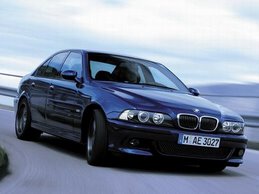
 I, however, could understand if you question my mention of the Cressida as it's a car considered to be styled in a manner resembling a stone brick. Most would tell you it's about as interesting as one too, but I'd beg to differ. Oh yes, strip away that simple exterior - which I quite like for the record - and you've got a highly involving car. Precise steering, a chuckable chassis, decent handling and a road-connected feel like few other Toyotas. And actually, in my opinion, nearly comparable to a BMW E34 5-Series of the same vintage.
 My great experience with Toyota's can attest to the 1990 Cressida being amongst the most involving and entertaining Toyota's to drive - even though you'd never know it by looking at it's plain-jane exterior. And hell, I haven’t even mentioned the various selections of Celicas…
That all being said, I do believe it's important for critics to look at Toyota's past history before being overly critical of the company's operations and philosophy. Conversely, I do realize we are not living in the 1980's and 1990's anymore and this means I must move on. Nowadays it's clear that Toyota has pretty much attempted to rid their line-up of any real fun and exciting cars - specifically those which are RWD - so that they can obviously promote the Lexus brand. And even with that particular brand there isn't a whole lot of sport to be found, quite frankly; just about everything and anything they have is focused on luxury, but one should mention their compact IS saloon. Yeah, it's not quite as exciting or intoxicating as some of their previous vehicles (from a drivers point of view in my eyes), but it still offers a more than somewhat decent and sporty ride.
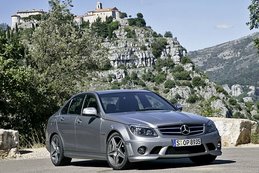
Let’s not forget about the very near future. What greater display of talent from Toyota’s fine engineers could you ask for than by displaying their arriving-soon performance flagship, the "IS-F"? With a top speed on the north side of 170 mph and 5.0 litre V8 pushing 423bhp and an insane 372lb-ft of torque you can be sure it'll be won't fail to bring a smile to its driver. Will it be as fun and entertaining as the BMW M3 and/or Mercedes-Benz C63 AMG? Maybe, maybe not - that remains to be seen, but you can count on an entertaining drive no doubt.
And lastly, but certainly not least, I am a Toyota/Lexus enthusiast who has a great deal of appreciation for all automobiles - no matter the make, no matter the type. The automotive world does not start and end with my favorite manufacturer, as it does with so many other single-make fans. For instance, and as I've made evident in the past, I am a great admirer and fan of exotics/supercars; specifically the crazier ones.
Can the words "Toyota" and "enthusiast" ever co-exist? Is such a union possible? Is it logical? Most certainly, and as I mentioned up top, you can sure there are more than a few of us out there.
By Bruce McCulloch
 If you’ve been thinking of picking up a Lexus GS, you might be best to hold off until the 2008 crop arrives with the introduction of a meatier 8-cylinder model.
For 2008, Lexus will be dropping the GS430, in favour of a brand new GS460 which will not only be benefiting from a more powerful engine, but a host of other exciting and enticing features.
Whilst Lexus has just (less than 48 hours ago) released the photo seen here of the updated ’08 model, they have deemed it appropriate to previously release a great deal of the model details through a press release from their pressroom. Should you not have access to their press room and am interested, I will be glad to give you information you’ll need (and want) to know should you be interested in placing an order on an 2008 Lexus GS.
The most obvious, and perhaps fundamental of changes which the ’08 GS benefits from is a modified 8-cylinder engine with not only more power, but more displacement. This updated model promises an extra .3 litres of displacement bringing the tally total to 4.6 litres with the addition of 342bhp peaking at 6,400 rpm with a robust 339lb-ft of torque rushing in at 4100 rpm. For respective comparison, this means the GS460 not only has an additional 52 some horsepower advantage over its previous model, but an extra 20lb-ft of torque as well. Unfortunately though, this extra bit of torque comes at a full 700 rpm later than the 430; nevertheless, Lexus promises its GS will hit zero-to-sixty in 5.4 seconds and top zero-to-one-hundred mph in 14.2 seconds.
And putting this additional power to the road is no longer the job of Lexus’ 6-speed automatic transmission, but rather the same 8-speed automatic transmission we’ve already seen showcased in their flagship model, the LS; and one that is soon to be seen on their performance flagship, the upcoming IS-F.
Lexus claims both the 2008 GS350 and GS460 will benefit from that of a “revised front bumper with lower-intake and front grille with chrome-plated surround”. Additionally, Lexus promises 2008 GS variants will feature “ultraviolet and infrared-ray reducing tinted glass for all windows”, “a new 17-inch designed alloy wheel” and the choice of two new exterior colours, “Golden Almond Metallic” and “Opaline Pearl”.
Should that not be enough to satisfy your tastes, you’ll be happy to hear that the interior will also feature a few new features to keep most any diehard Lexus enthusiast happy.
When it comes to the general interior ambience you’ll be delighted to hear that the GS will now offer the option of Light Gray Leather with the addition of a luxurious “Dark Gray Birds-Eye Maple wood trim” with the option of wood trim on the door switch plates. Further adding to the ’08 GS’s allure are “relocated fuel lid and trunk opener” as well as a “revised instrument cluster with revised aluminium brushing” and what-not. And to put the cherry on the top of the cake, GS460 owners will be able to spec their vehicles out with front seats with ventilation.
Overall, it’s a package which is surely not to disappoint the casual Lexus buyer, or am I wrong?
Well, actually, Lexus enthusiasts worldwide have not been afraid to reveal their disappointment and annoyance with this model update. While no one can deny that the GS is a great car and most definitely a worthy competitor to the Mercedes-Benz E-Class and BMW 5-Series, it feels as if the car is starting to run its course.
For starters, most would have naturally assumed that the GS460 would have been directly carrying over the LS460’s massively powerful 380bhp V8, but such is obviously not the case; perhaps they felt it was necessary to keep the LS the absolute flagship of the line-up? So then, it would appear that Lexus has decided to essentially de-tune the LS460 engine, or have they? According to Lexus’s press release, this particular engine wears the code of “1UR-FSE”; the problem with this is that most Lexus enthusiasts believe it to be a typo throughout the original document as LS460’s shipped to the Middle Eastern market are sporting the identical power figures to this GS460, but are wearing the engine code “1UR-FE”. The notable difference between the two would be the “FSE” labelling and without the “S”, thus indicating a lack of direct fuel injection.
Whether this is at typo, or an actual LS460 engine with direct fuel injection merely detuned to 342hp, is unclear at the moment. My personal guess is that it is indeed a typo and this engine is the one lacking direct fuel injection; or in other words, a “1UR-FE”.
In any event, while 342hp is certainly more than enough to satisfy the power needs of most any luxury cruiser, it still means that the GS460 is 40 some horsepower behind that of the recently updated Mercedes-Benz E-Class which is now getting 388bhp from it’s revised 8-cylinder; this also means the GS460 is slightly behind the 2007 BMW 550i which boasts a hardy 367bhp.
Meanwhile, I believe there is an even greater threat to the GS460 and it’s internally.
In all honestly, I am wondering why Lexus is deciding to keep the gap between its three GS variants so awfully close. Such is especially evident when one looks at the difference between other Lexus models such as the IS and LS. The LS for instance, varies in price from $61,000 USD to a massive $100,000 USD, with horsepower varying from 380 from an all-petrol motor to 430 with a hybrid motor. With the IS, Lexus goes an even greater pricing distance between it’s models in North America varying prices from $30,000 USD to $50,000 USD and horsepower differences from 215 with the IS250, 306 with the IS350 and soon to be 400+ with the addition of the IS performance model, the IS-F.
Their GS on the other hand, is subject to a much smaller distance in variation with its models. Let’s face it, the GS350 with a full 303 horsepower isn’t exactly lacking, while the hybrid GS450h is offering equal power and performance to that of the GS460 for a price tag, which as current comparison between the models shows, will be more or less on an par with it’s V8 equivalent . Not to mention – if you planning on using you’re GS in the city, the added benefit of better fuel economy. Yes, I realize that with the 450h you’ll miss the throaty sound of a classic 8-Cylinder engine and not to mention a hefty addition of kerbweight, but frankly, that would not be enough to stop this enthusiast from purchasing the 450h over the 460. Make no mistake though, I have no doubts the GS460 will be a top-notch vehicle, fully deserving of the Lexus name plate and for those enthusiasts who crave V8 power in a Japanese car, you won’t be able to do much better.
And with that bombshell of a conclusion –an enthusiast choosing a hybrid 6 over a petrol 8 - I leave you this: by keeping a close distance between the GS460 and GS450h, is Lexus purposely trying to promote its hybrid model?
 By Bruce McCulloch