Showing posts with label supercars. Show all posts

Tuesday, November 20, 2007

ISDERA: The History

By Bruce McCulloch

The early 1990’s were an overtly awful time for supercar manufacturers, especially those with little history or prestige behind their names. Our market today is strongly fuelled with a vast amount of "specialty" manufacturers such as Pagani, Koenigsegg, Ascari and Wiesmann, but the supercar market back than was mainly driven by well-established auto firms such as Porsche and Ferrari.

Those who were new to the business, or at least relatively new, were having a hard time at establishing a proper market. Manufacturers such as McLaren Motor-Cars – developer of the awe-inspiring 240mph "F1" - and Jaguar, with their XJ220, soon found out that there was truly little market to be captured. And most, if not all of the companies with little prestige or universal acceptance, had to soon start looking at filing bankruptcy.

In those problematic years: Bugatti went bust in 1993; "Cizeta" producer of the "Cizeta-Moroder V16T" was shutdown in 1994 after a series of issues related to production costs, and even Gerald Wiegert’s "Vector Aeromotive" automobile company had to close shop in the early 90’s due to lack of sufficient funding – though to be fair, they were later resurrected.

And with all of the trouble, some even believed that the 1990’s were the death of the supercar. Myself? Well, it was a little before my time, but ain’t it funny to look back on it these days? Our current high-performance/supercar market resembles a pack of hungry wolves; and it keeps getting more and more competitive.

But out of all of those who suffered the 1990’s supercar-success drought, it’s the fall of a small sports car manufacturer founded in Hildesheim, Germany by one Eberhard Schulz which bothers me the most.

"Isdera" is the company, and they’ve created some of the world’s most interesting and visionary sports cars.

The history behind this evocative company actually harks back to 1969 when company founder, Mr. Schulz, designed a prototype race car – named the "Isdera Erator GTE" - with a tubular frame and a carbon fibre chassis. The name "Isdera" standing for an acronym of various words: I for "Ingenieurbuero" (German for engineering) S for Styling, D for Design and R, for Racing.

Mercedes-Benz C111


He hadn’t been known for a whole lot up until this point, but when he invented this formula of engineering for a sports car, he hit it big. So big in fact, that in the late sixties, Mr. Schulz was afforded the opportunity to oversee a series of Mercedes-Benz prototypes – starting with the mid-engined, rotary powered "C111". Shortly thereafter, Eberhard joined Porsche in 1971 as a design engineer to primarily to study upon the exterior styling of the companies future vehicles.

In 1978, however, Eberhard with his new-found knowledge and appreciation for sports car engineering, decided that he’d leave Porsche and fullfill his dream to create his very own company. But before he pursued his dream, he spent the remainder of the next five years working closer and closer with Mercedes-Benz. Even still, many of his designs and creative work still hadn’t been presented to the automotive market; and he was unknown to the public, in other words, Eberhard was still very much a design engineer behind the scenes with little appearance and mention in the automotive journalism and what-not.

But Eberhard's hard work was about to pay off. His most well known project design comes from the Mercedes design study referred to the "CW 311". Originally destined with an aerodynamic value of just .311 CW, it was set to be the first true successor to the Rotary Powered C111 of the late sixties. When Schulz presented his final design to Mercedes in 1978, they were so awe-struck with the design that they allowed the car to wear a Mercedes-Benz badge


Problem was, it was to only be seen as a "prototype concept", and not something that Mercedes was going to take the time to actually produce and set loose on the road. Eberhard, obviously proud of his own design and annoyed by Mercedes' choice not to put the vehicle in production, decided that he'd now make "Isdera", a true automotive company with its very own model. And in 1983, Eberhard’s dream came true when Isdera became a both a self-operated & self-owned business.

Tidbit: the eagle in the Isdera's badge is meant to pay homage to the aircraft workshop that the company occupied during it's life time.

Borrowing upon the CW 311's design study, Eberhard was able to slightly redesign the car for road use and ultimately, avoid possible design copyright issues. The company's first car was the "Spyder 036i", and further improving upon his connections with Mercedes-Benz, Eberhard got his hands on a Mercedes' 3.6 litre straight 6 motor -hence the vehicle's name - which powered the 036i. Though arguably, Eberhard's most famous work with his company comes from the car that was released in 1984, the "Imperator 108i". Bearing an even great resemblance to the CW 311, the 108i was an even bigger hit for Schulz - even though just 30 were built.


Employing the same 5.0 litre 8-Cylinder motor from Mercedes-Benz's 500SEC, the 108i had around 350bhp, 320lb-ft of torque and performance figures such as a 176mph (283 km/h)** top speed and a 0-62 mph (0-100km/h) time of just 5.0** seconds dead. For its day, it was incredibly fast, and in all fairness, it's still pretty darn fast by today's standards.


And after a 3 year period of building both the 036i and 108i, Isdera released yet another vehicle - this time, one called the "Imperator 033i Spyder". In all intent and purposes, it was more or less a convertible version of the 108i; same engine, same mechanicals, but still utterly fantastic.

Suffice to say, the 80's were very prosperous for Mr. Schulz. It all looked very bright for Isdera, and while existing models sold at a slow and steady rate, Eberhard had already been spending all of his time and money - somewhere around €4 million - to develop a new car to be released in the 1990's. Eberhard had the idea to make something unique, something truly advanced and sophisticated for it's time. Though it was undoubtedly his most advanced project, it is most probably the reason the company eventually went bankrupt.

But the thing about Eberhard was that he always was a true visionary; not one who liked to sit back and maintain the status quo. For him, the greatest pleasure was gained in creating new design projects; projects that would redefine what we know as sports cars. And in 1993, his newest and undoubtedly most amazing road car was released. And even though this car was all German, it boasted the name "Commendatore 112i", which was actually a tribute to Enzo Ferrari, who had become known as "Commendatore" or "the monk of Maranello" throughout Europe.

Fitting with previous Isdera projects, the C112i was a technical masterpiece; but more specifically, an aerodynamic technical masterpiece.

In terms of its design styling, it's quite obvious that Schulz's C112 owes much to previous Porsche motor cars. If you ask me, the 112i looks to borrow much inspiration from not only Porsche race cars such as the "917", but even such road versions of the late 80's generation of the 911 (the "930").

Tidbit: The headlamps of the 112i are in fact borrowed from that of Porsche's early 90's "968" coupe.


This vehicle in my humble opinion is the pinnacle of his design work. It's a car which was certain to make most any sports car enthusiast's jaw hit the floor. It's very clean and imposing, but aerodynamically efficient; one of the best supercar designs ever as far as I'm concerned. And with a whole host of features like two gullwing engine compartment doors, and an overall extensive use of "green house" glass, the 112i was, and still is quite unlike anything else on the road.

But of course, you can't talk about the 112i without mentioning its great technological advances. It's rear spoiler for instance, automatically adjusted itself to the speed of the vehicle and additionally served a functional purpose as an air brake; the latter of which was unheard of on a road vehicle for the time. Even the suspension was automatically adjustable to speed thus improving both the vehicle's stability and handling at high speeds; all thanks to a velocity-sensitive electronic chassis lowering the car a full three inches.

Tidbit: The C112i shares the same 5-speed Getrag transmission found in the 930-generation 911 Turbo

As for the interior of the vehicle, well, there really isn't one. It's just a collection of hard plastics, with classic square-edged 1990's cabin architecture. Of course, back in the day it was probably the thing, but its interior hasn't aged too gracefully. Yet despite that, I wouldn't have it any other way as it’s truly contemporary to such a car.

And inasmuch as Isdera's component sourcing from Mercedes-Benz had continued to be highly valued, Eberhard had little reason to search elsewhere for an engine to power his new beast. After all, the Mercedes-Benz engines were not only reliable and durable, but powerful and even gave off a bit of prestige to a brand which, even at this point, had very little. Wanting to hasten the C112's advancement into the supercar world, Eberhard got his hands on Mercedes’ latest - at the time – a 6.0 litre, 48 valve, 12-cylinder motor. It was an engine that in this particular stage of tuning was churning out 408PS (402bhp) and some 427lb-ft of torque. Performance figures were as claimed: 0-60 in 4.7 seconds, and a top speed a bar-boasting 205+ mph (330+ km/h). In all honestly though, those performance figures weren't particularly impressive for a 1990's supercar. Though the fact that the 112i was a full 441lbs (200kg) heavier than the 108i didn't help... Anything with a similar price would have knocked it down the hill, but I couldn't care about that either as the allure of this car is not just raw performance numbers.

Tidbit: oddly enough, this exact engine (codenamed the "M120") found its way into the Pagani Zonda C12 in 1999, and is the same basic engine which powers the larger, more powerful Zonda iterations; such as the 7.0 and 7.3 litre engined-cars in the Pagani lineup like the Zonda S and Zonda F.

Shortly after the C112's prototype release in Geneva, Eberhard was forced to close shop as it was no longer financially sound to keep the company running. One has to wonder whether the company would have gone bankrupt if Eberhard hadn't spent so much money to develop the C112. Though, even if it did mean the death of the company, I'm glad enthusiasts got to see a vehicle as spectacular as the C112 was.

The Road-Working Prototype:

In October of 2005, the sole working C112 prototype was offered on eBay for no less than $4.8 million dollars. But with little prestige, nor any real footing in the supercar world, it failed to sell. At the time the car was located in Switzerland, but strangely, only road-legal in Germany.
The vehicle itself was more or less the original with a few modifications; those being a new steering wheel, new alloy wheels, an engine borrowed from a Formula One vehicle (the brand of which was never revealed) and a few other tiny features.

Isdera's Future & Closing Thoughts

After Isdera's bankruptcy back in 1993, the remainder of the company was sold to a Swiss interest, but it was not heard from again until August of 2006 when the company made a blip on the radar yet again. And though it is indeed possible that the company could make a revival in future years, things aren't looking too favourable for the company at this time, since they have lost a recorded $73,212 since their revival due to lack of activity and shareholders backing out.

Can Isdera ever make a proper comeback? Can they? Should they?

Well, I most certainly hope so. There's no doubt that Mr. Schulz wasn't the best businessman, but he was one hell of a visionary; an artist, an engineer - an all-out brilliant man.

** Tested by German magazine "Auto Motor und Sport"

Friday, August 3, 2007

Misconception

“A Ferrari F430 you say? Oh, those are cool, but you can’t drive stuff like that on the street”.

I can’t tell you how sick I am of hearing such predictable and overused clichés when it comes to talking about supercars. That being said, I’m not sure if people are just misinformed or stuck in the 80’s, or perhaps both - but the fact remains that such a mindset can no longer be used, as the automobiles in this particular segment have started to naturally evolve into cars that are more casually usable . Quite simply, more than most of today’s supercars have been designed with regular road use in mind

The immediate question following is of course, when, and who, for that matter, decided that supercars should be usable?

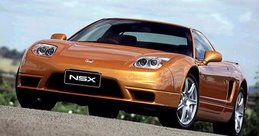
The outcome of that story is subject to great debate, but in my honest opinion such a trend began with the Porsche 959 – which happened to be one of, if not the first vehicle of this type to transcend a barrier that had previously been thought unbreakable. Mind you, that’s not to take credit away from some of the other greats which helped refine that image, like the 911 Turbo and the Honda NSX – both of which arguably served their purpose as daily drivers in ways marques like Lamborghini and Ferrari could only dream of at the time.

The evidence to support my theory of supercars no longer being “hardcore weekend cars” is rather evident by the following paragraphs.

For starters, the equipment levels to which these recent supercars are being subjected to is quite unlike anything before. Since when did vehicles like a Porsche Carrera GT offer such as options as an air-conditioning system that actually works, a proper stereo system (with subwoofers!) and even adjustable pedals? Furthermore, these particular items I speak of are no longer just options, but are becoming necessities and expected on vehicles sporting such ridiculously high price tags.

Also worth noting and unlike the supercars of the ‘90’s, is that these features actually perform like they’re supposed to, and even more importantly when we’re discussing supercars, they don’t break down after 5000 miles! The cabin climate systems they are fitting actually produce more heat than a toaster plugged into the wall and moreover, the speaker systems are being built with actual sound quality in mind and not something reminiscent of a 1960’s radio. Want proof? Honestly, why else does Aston Martin offer a 950-watt stereo with Dolby Logic II for their DB9? While I fully realize the DB9 is a ‘GT’ car, the fact remains such is now expected.

Other such features such as power steering, ABS and traction control are now becoming an industry standard and consequently a must- have for all great supercars.

No longer are owners being left in a bare carbon tub with no comfort as the newer generation of supercars are constantly focusing on ergonomically designed interiors. No one can doubt that these vehicles are still somewhat of a tight fit, yet nonetheless, you no longer have to detach your elbows from your body in order to drive one with skill. Meanwhile, the desire for better visibility has become paramount on the majority of these supposedly ‘un-drivable fancy sports cars’. This is a far cry from the past when rearward vision in an exotic car usually meant looking though something that was just about the size of a mail slot.

My point of view is not unique in this regard; ask an owner of one of these miraculous vehicles or any automotive journalist who has much experience driving them.

Further backing up my point is the constant recent talk of these vehicles actually allowing the owners to drive them comfortably at high speeds and actually use them in an urban environment. While high-end vehicles from the mid-sized Ferrari F355 to the whale-sized Jaguar XJ220 were often labelled in the past with such comments as “awful ride quality”, “inconsistent steering input”, “cheesy build quality” and the “lack of driveability on either road or track”, the same cannot be said for the newer generation of supercars.

For instance, the 600bhp Italian exotic by the name of the ‘Pagani Zonda’, is a vehicle that is constantly praised for its user friendliness (both on and off the track). Often complimented is its suspension setup, which allows a ride quality that is not only sports car like, but also ample and smooth. Ample and smooth enough so that one can actually enjoy his or her supercar while burbling along at legal speeds and with the addition of proper shock absorbers, the Pagani Zonda remains a vehicle that can apparently adapt to various road surfaces without any real trouble. With that being said, the Zonda is clearly a supercar that rewards its owner with the typical excitement expected of such a vehicle, but without the bone-crunching and body-smashing ride typical of the past.


And, a long trip or urban crawling is the same in terms of sound ambiance, because being introduced into today’s supercars is excellent sound insulation and efficient yet restrictive exhausts so that these cars can actually be used in a proper capacity.

Now the Pagani Zonda is merely one example, and honestly, such usability is something that doesn’t apply to all of the supercars being produced today, but most definitely to a majority of them.

The old ‘show and display’ insurance plan (which restricts mileage to low numbers), purposely made for vehicles like the Pagani in the past is now often being thrown away as owners want full and unrestricted use of their vehicles. One practical result of the new everyday driveability and the owner’s desire to to exploit it is that these some of these wonder cars are showing up recently on exotic used car lots with upwards of 60,000 miles! Maybe there’s hope for me yet in terms of buying an exotic car someday, even if I’m still making a not-so-exotic income.

What makes this all even more impressive is the fact that despite these vehicles are now able to act like Clark Kent when needed, they have all most certainly simultaneously increased their level of superpowers. Admittedly and perhaps obviously, supercars are still a far cry from being as useable as a Toyota Camry; but the fact is these cars are no longer pieces intended for track days or the show stand.

Wednesday, July 18, 2007

Can't Have It All

By Bruce McCulloch

After a recent slew of magazines journalists downplaying the newly released, 4th generation BMW M3 for being ‘soft’, ‘smooth’ and ‘matured’, I can do nothing but shake my head. Not because I disagree with their assertions, but rather because I see our society has killed yet another legend.

This unfortunate news is deeply saddening to not only BMW enthusiasts, but to enthusiasts around the world who once viewed the iconic ‘M’ badge as a symbol for race-inspired, pure built road-going race cars. Those who are old enough to remember the glory days of the lightweight, compact, 4 cylinder rocket of the late 80’s/early 90’s, the E30 M3, will be sorely disappointed to hear that the special genes which once made an ‘M car’ are slowly fading away.

Mind you (and for those really paying attention), this discussion is not new to the world of BMW. Truth is, each and new coming generation of BMW M3 has undergone such criticism. That being said, it’s clear that for the longest of time the M3 has been evolving into a something less compact, more luxurious and comfortable, while ultimately becoming more powerful.

Frankly, automotive enthusiasts worldwide are not open to the thought that the M3 could soon become a luxury car and while I cannot hide my disappointment with the thought, I feel the majority of enthusiasts are acting obtuse about the whole thing – viewing the whole picture through a key hole. Many are muttering the words, “has BMW gone mad”, “how could they let this happen”?

But who’s really to blame? BMW or our ever growing needs as consumers to have everything? I think it’s only fair to say a little of both.

Evolution:

Obviously, evolution is not a new concept and BMW is most certainly not the only automotive company ‘going with the flow’. For instance, such criticism has followed the current generation of 911’s (codename: 997) which when first released was constantly bombarded with complaints from Porsche enthusiasts for being tamer, more refined and easier to driver than the previous generations. Furthermore, people were saying the exact same thing about the 996 911 when compared to the 993 911.

Problem is, evolution is somewhat of a necessity as a means of trying to please a growing body of potential buyers. Unfortunately with each coming decade our once “four-wheel transportation” continues to morph into a digital office. I suppose the real question is when is too far, ‘too far’? We consumers ask far too much and then complain about it. Hell, if you want a sports car, buy a Lotus Elise; if you want a luxury sedan, buy a Lexus LS.

There are those companies would have us believe you can have it all but few truly deliver. Case in point, BMW M5 – with a flick of a button you turn an ‘underpowered’ 400 horsepower civilized sedan into a so called 500 horsepower ‘snarling beast’. Please... I don’t deny that the M5 is a great car, but this rubbish has gone all too far.

Now, you might be gathering the impression that I feel there are absolutely no upsides to our ever-growing consumerism - however, that is incorrect. If there is any upside to this I believe it to be in the world of exotic metal which has surely benefited as these gas sucking, face-pulling, wallet-crushing autos are no longer the back-breaking, dangerous beasts they once were. On the other hand, one could argue that today’s Ferrari Enzo is nowhere as entertaining as Ferrari’s 40th anniversary supercar simply because it is tamer and more sophisticated.

It’s a debate which will gather a different opinion from different enthusiasts, but make no mistake; in the opinion of this automotive enthusiast it is us who are ruining the car industry. Our constant need for unnecessary items such as IPOD connectivity and MP3 adaptors are leading us further down a road which is forcing manufacturers to struggle to find the perfect threshold between the two ideals of luxury and performance.

Sunday, July 8, 2007

Recommended Auto Magazines

Try something a little different...

By Bruce McCulloch

Tired of the same old repetitious and uninteresting newspaper clippings and/or common mainstream magazines about automobiles? Want a magazine offering entirely different perspectives on your favourite automobiles? If so, I’ve got five magazines which I’d like to recommend, and they happen to be ones which I guarantee will fuel every North American sports car enthusiast needs.

My list includes five paper-back products which I believe offer exciting and entertaining journalism on vehicles commonly not spoken of in most North American magazines.

‘EVO’


Origin: Great Britain

If you’re expecting a roster of reviews on vehicles such as the Opel Astra and Peugeot 407 you’ll be sorely disappointed. On the other hand, if you’re interested in the world’s most thrilling and exciting drivers’ cars, then EVO is the magazine for you. In addition to unique humour and writing, you’ll get a chance to see what is arguably the best photography of some of the world’s rarest and unknown vehicles.

Where to Purchase: Barnes & Noble, Chapters, Borders, etc
Price: Anywhere from $8 to $13 (depending on country)
*Note: Occasionally shipped a month late (IE. June issue arriving in July)
Website: http://www.evo.co.uk/

'Sport Auto'


Origin: Germany

Sport Auto is most definitely a magazine which all ‘performance buffs’ should check out. This magazine, which is written entirely in German, offers what is arguably the best performance test in the world. The monthly ‘Supertest’ is in fact what set it apart from all other performance oriented magazines.

In Europe the Supertest has become a benchmark not only among automotive enthusiast groups, but also among the automotive companies themselves. As Sport Auto is a monthly magazine, they choose to restrict output of the Supertest to one vehicle per month – as a result, the waiting lists for automotive companies to get a spot in this exclusive test can easily build towards the length of a year!

This comprehensive performance test includes two different racing circuits. The first is the world famous Nürburgring Nordschliefe (which spans over 13 miles), the other a much shorter, twisty 2 mile circuit referred to as the “Hockenheim Ring”. The advantage of offering two entirely different circuits is important as it gives us a look at those vehicles that can tackle the fast and sweeping corners of the Nürburgring Nordschliefe and those that are able to adapt to the tight and challenging corners of the Hockenheim.

Furthermore, this amazing test also includes: various slalom courses, braking tests, acceleration figures (standing and rolling acceleration) and last but not least, a wet-handling circuit.


Where to Purchase: Availability is scarce in North America, but there are a few select shops which choose to sell it. Although I’m afraid I cannot point you to any specific distributor as I’m not aware of the retail locations that may carry the publication where you live. If you truly desire Sport Auto, but are unable to find it any of your local stores, I’d suggest ordering from such websites as websites as Ebay, etc.
Price: Anywhere from $5 to $10 (depending on country)
Website: http://www.sportauto-online.de/

‘GT Purely Porsche’


Origin: Great Britain

For any Porsche enthusiast, ‘GT Purely Porsche’ remains the undisputed ‘king’ for information and subjects on the Stuttgart firm. Not only does it offer a wide of assortment of newer vehicle tests, but also offers useful additions such as a buyer guides, complete specifications for every vehicle Porsche has produced as well as information and tidbits on the rarest of Porsche automobiles.

Where to Purchase: Barnes & Noble, Borders, Chapters, etc
Price: Anywhere from $8 to $15 (depending on country)
Website: http://www.gtpurelyporsche.com/

‘Sports Car International’


Origin: United States of America

Sports Car International (or alternatively known as ‘SCI’), is often viewed as the American magazine which reads and looks European. That being said, SCI provides information and test reviews of vehicles not commonly covered in North American magazines. Thanks to a large variety of journalists from around the world, it’s both well written and informative. This magazine is among the best at providing cultural differences and opinions.

Where to Purchase: Borders, Barnes & Noble, Chapters, etc
Price: Anywhere from $5 to $8 (depending on country)
Website: http://www.sci-mag.com/

‘European Car’

Origin: United States of America

Contrary to what its name may suggest, European Car is actually a product of North America, and it certainly covers more than just European automobiles! For those with the interest in high performance tuner vehicles (Brabus, Nismo, Ruf, etc), as well as a general interest in regular exotics (like Porsche and Ferrari), European Car may well be the magazine for you.

Where to Purchase: Borders, Barnes & Noble, Chapters, etc
Price: Anywhere from $5 to $8 (depending on country)
Website: http://www.europeancarweb.com/