Wednesday, November 14, 2007

Porsche: The Five Most Beautiful

By Bruce McCulloch

With around 70 years of history behind Porsche at this point, choosing just five Porsche automobiles as the most beautiful of all isn't an easy task. Oh no, in fact it's downright daunting. This is one instance where one must take into account not only every little detail, but every little niggle and nanny in approaching a general design philosophy and theme which the company has stood behind for the better part of the last 7 decades.

The Porsche design element is one which is unmistakable - especially when it comes to the 911. Aside from what is referred to as "Hitler’s revenge" - the Beetle - the 911 is pretty much one of a kind. It's unmistakable, unique and ultimately, iconic. And that being said, many of the 911's design elements have insinuated themselves into almost every other vehicle which has rolled out of the iconic gates in Stuttgart. It's a trademark look which is hard to explain with words, but clearly evident when one looks at the Porsche line-up; many of the models not branded with the eminent "911" moniker still share a family trait (or two) in appearance which is not the least bit surprising.

Even Porsche's 605bhp "Carrera GT" flagship, shares what would appear to be the same styling manner which the company's 550 Spyder sported back in the late 50's. And now-a-days, both the Boxster and Cayman - even the Cayenne - seem to have a "Porsche vibe" to them. And this is obviously something Porsche as a company has strived to perfect with every passing year; with each and successive generation of Porsche automobiles, they have the utmost unique ability to make a design fresh and modern, while retaining the design values and design cues which have made the company so successful.

And suffice to say, it's something that makes Porsche, well, Porsche. One doesn't buy a Porsche hoping it’ll look like a Ferrari, one buys a Porsche knowing they are getting a vehicle which embodies every stylistic detailing element the company has ever penned. It's a design spirit which stands alone among modern cars, and in this day and age, truly one of a kind.

Mind you, such a design philosophy is often under criticism as some enthusiasts complain that is exactly what is wrong with Porsche; that they all look too similar, that they’re bland and boring to gaze upon. Not surprisingly, I strongly disagree with such.

In any event, with output that is approaching nearly 100 different automobiles from this great company, which five are deserving of such a “best of” title? Well, here's what I think - chronologically ordered:

904 Carrera GTS (1964)


For a car which debuted in 1964 as a sports-car endurance racer, the 904 looks every bit as fresh today as it did the day it was released. It is a gob-smackingly good looking car. Unfortunately, information relating to its design is quite rare, but I think the picture speaks for it’s self.

930 Slant-Nose (1987)


Though up until the early 80's the 911 had been viewed as the cute and quirky sports car with circular headlamps, the flachbau - or "Slant-Nose" as we know it - shows that little work was required to turn the 911 into something truly more aggressive. Commissioned in 1981 by Rolf Sprenger and ordered through the specialist individual "“Porsche Exclusiv Programme”, the Slant-Nose is undoubtedly one of the most interesting vehicles to ever roll out of Stuttgart.

With a body inspired by that of the 1976 "935" racer, the Flat-Nose looks every bit the race car with its hard-edged, flat bumper bonnet design, and with the addition of what was then new sporty "air vents", "rear spoiler" and "integrated driving lamps”, it's little wonder why the Slat-Nose makes it on this list. Suffice to say, there ain't a 911 like it anywhere.

993 Turbo - (1997)


Though the 930 and 964 generations of the 911 were some of the most iconic styles of all time, the 993 - particularly the Turbo version - marks what is arguably the best looking 911 ever designed. It's a design that even after 10 years since it's release, has been able to withstand the test of time; even today, it looks fresh, modern and ultimately, Porsche-like. And as far as I'm concerned, the 993's Turbo's design is so spectacular, that it's not only one of the best-looking Porsches ever assembled, but one of the best designs anywhere. With a front end suggesting a 911 design evolution, a slightly quirky silhouette and a rear end with accentuated fenders, a large body-attached spoiler and a distinctive light bar, the 993 Turbo is the most exceptional version of one of the world's most iconic vehicles.

993 GT1 "Strasseversion” (1996)


It's not often that I get worked up about a homologation special, but the 933 GT1 is the perfect example of road vehicle finely blended with a racing car. It's unquestionably from the 911 family, but makes the transition in a manner which is completely unique. Sure, being insanely long and wide, and having no rear window, it might be absolutely absurd to drive it on the road, but hell, I wouldn't mind. It's an angry and bulked-up 911 on steroids, and it's just great.

Carrera GT - (2004)


It's largely accepted that most supercars of this sort have designs which are often compromised for aerodynamic efficiency. And with vehicles such as the Ferrari Enzo running around, how could one argue? The Enzo is a vast, almost tortured array of Formula One-inspired hard edges - all for the sake of keeping the car aerodynamically efficient. The Carrera GT though, is very much a different story; rather being an edgy and hard-to-digest shape, it's clean and undoubtedly Porsche. And there are no compromises about it - the Carrera GT looks 100% Porsche. It's aerodynamically efficient, without alienating any of the company's classical design traits. From it's smoothly and fastidiously styled front end, to it's rear-end profile boasting a carbon fibre undertray, a retractable wing and an exquisite set of mesh engine grills setting above the 10-Cylinder motor, this exclusive flagship supercar is styled like few other comparable cars. It manages to look all-racy, without being the least bit boy-racer or over-the-top.

The design detailing of the Carrera GT is also particularly interesting because it showcases a number of styling elements found in the company's past; one of the most evident examples being the brake cooling slots behind that of the front wheels which are near identical to those seen on the 993 GT1 which I previously spoke of.

So, there you have it – the Fabulous Five.

Wednesday, November 7, 2007

Blogthings Quiz

Give it a try fellow enthusiasts!

You Should Drive a DeLorean

You don't take yourself too seriously, and you prefer a fun, unusual car... like this Back to the Future gem!

Friday, November 2, 2007

Birth of an Enthusiast

By Bruce McCulloch

I'm sure it's safe to assume that once as young ones, we all had childhood heroes. Some individuals had musicians or celebrities as their heroes, while the vast majority of us car enthusiasts had a certain automotive hero which we lusted like few things else. You know what I'm talkin' about, I'm talking about that one particular vehicle that from your childhood that was the car to have; it was a full obsession, something you talked about to friends and family at a seemingly endless rate and perhaps, even had posters of on your wall. It was even perhaps, the particular vehicle that made you the enthusiast you are today.

As enthusiasts we've all got at least one, or two of these vehicles. As for the particular vehicle, well, that's certainly going to depend on two factors: one, your age and two, when you got into cars. My Father for instance, also a rabid enthusiast, didn't get into automobiles until he was about 24 years old. His passion for the automobile was born by his both his own father, and his sister's husband. His Father was an all out car fan, and one who owned a whole host of American muscle - A Pink (what was he thinking?) Pontiac 440 LeMans, a Dodge Challenger amongst a whole other bunch of crazy tyre shredders. And his sister’s husband was no different; he also suffered from an automobile obsession having owned such vehicles as a Dodge Dart, a Triumph and even a little BMW 2002. So then it should be no surprise when I tell you that he now owns two Mercedes-Benz products; an E500 4Matic and a ML320 Cdi.

Overall though, it is more than likely your age defines your childhood automotive hero. For those with childhoods in the 60's and 70's your automotive hero is more likely to be such a vehicle as the Ford GT40 or Chevrolet Corvette rather than, let's say, one whose childhood was through out the 80's who lusted for such vehicles as the Lamborghini Countach and the Ferrari Testarossa.

As for myself, I like to believe that I was born, as Bill Ford would say, with petrol in my veins - in other words, a car enthusiast from birth. Though, while I was playing with Hot Wheels from a very young age, it wouldn't be a completely fair correlation to say I was die hard cast of my father from birth. It wasn't until I was about 8 or 9 years old when I started to show real interest in cars.

Two of my greatest automotive passions, Toyotas and supercars (odd couple, aren't they?), come from my very early years. My Toyota enthusiast genes were born from the fact that my Father has always had affection for Toyota automobiles. And no qualms, he has always been a Toyota enthusiast. Through out the '80's, he owned Celicas, a Supra and even, a rather rare Supercharged MR2. In the mid 90's however, my passion for Toyota products had further been fuelled by my father's purchase of an LS400 and shortly thereafter, an SC400. By the time I was about 9 years old, I was a fanatic and had the posters, the magazines and the car models to prove it.

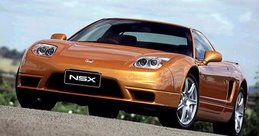
Late '95 was also quite a monumental time for me as it was the year when I became interested in supercars. And Honda, and their fabulous NSX, is who I have to originally thank. And of course, it didn’t hurt that my father also lusted after this Japanese wonder.

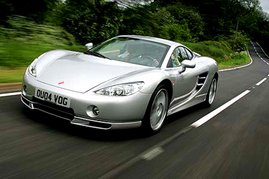
Though, my obsession with automobiles hit an all time high in 1996, at age 10, when a certain 350bhp 8-Cylinder English supercar was released. It had been on the market for some two decades already, but had previously never been available with an 8-cylinder engine. Any guesses? Well, this is it:


Oh yes, the release of the Esprit V8 was something truly fabulous for myself. Any perceptions which I previously had about automobiles were completely blown away. It truly was love at first sight.

In my eyes, there was nothing greater than the Lotus Esprit V8 Turbo, and as far as I was concerned, it was the pinnacle of everything in the automotive world. It had everything I loved in an automobile: a sleek and edgy design; an interior which was fully dressed with leather amongst a sporty design theme; prestige and heritage; an 8-Cylinder engine and mind-crushing performance all-around. The day I first laid my eyes on the Esprit V8, was the day my automotive enthusiasm became an entity.

But having lived – at the time – in a city which was certainly not known as the home of exotics, I did not get the chance to see an Esprit until 2001, and I had to move to a different country to see it! (from Canada to the United States). Admittedly though, I was a little cautious, especially as I knew that it was habitually recognized that meeting a childhood-hero was one of the worst possible things you could do - especially if it ended in disappointment. Anyone seen that episode of Top Gear where presenter James May gets his first drive in his childhood hero, the Countach? Suffice to say, it ended in absolute disaster. He found out the hard way.

Thankfully though, the Esprit was not a disappointment for me. I cannot remember being more excited than the day I walked into a local high-end dealership and sitting there, in all its shining glory, was a dark blue Esprit with a crème coloured interior. It looked, though as cheesy as it sounds, every bit as good as I had imagined. And it gets better - the dealer noticing my excitement, allowed for me to sit in the vehicle.

So then, with recent mention of Lotus reviving the Esprit model for 2008/2009, it shouldn't come as any surprise that such a thing means a great deal to me. My apparent hero will be born yet again, but for love of automotive enthusiast’s world wide, Lotus, don't screw this one up.

Overtly, writing this article has been a great trip down memory lane for me. But, you know, I'd love to hear how your enthusiasm of vehicles was born - your automotive heroes, etc. So, please do leave a comment; I'd love to hear about it!

Thursday, November 1, 2007

Design Study: Pagani Zonda

By Bruce McCulloch


Out of the many fantastic supercar designs that have emerged in the past some ten years, the "Pagani Zonda" arguably boasts the most "out there, over the top" design of the crop. Indeed, it's not conservative, nor is it quiet in its design elements and it's most definitely a car for the extrovert rather than the introvert. One could even go as far as to say the Zonda has a design which truly is an acquired taste; you either hate it or you love it.

Myself, well, I'm most definitely one of the latter. I'm one who appreciates the vehicle's great use of thematic, bold and extrovert styling elements; I'm all for the "racing car mixed with a F-16 jet fighter" look, as it truly is one of a kind.Though I can completely understand if one feels it's too clever by half, and thus feels the vehicle's design is very much bordering on overkill.

I think that to fully appreciate the Zonda from a design point of view, one must understand the Zonda's design philosophy and premise. And here today, I hope to give you further insight into this spectacular design - both for the curious and for already-existing fans of the vehicle who wish to learn more about it.

Now of course, most every design has some sort of inspiration and when it comes to this Italian wonder, the general design concept was inspired by that which is the Mercedes-Benz "Sauber C9" (a Group-C racer) of the late 1980's. No surprise then, this is when the Zonda (then codenamed the "Fangio F1" for the car's human inspiration, Juan Manuel Fangio) was born. From thereon, the company's founder and vehicle's designer, Horacio Pagani, would continue to creatively “stretch” the inspired design of the C9 while adding his personal touches of eccentricity.

I do think it's only appropriate for me to inform you on why borrowing inspiration from 1987 C9 was such an important thing to Horacio Pagani and his vision of the "Fangio F1". The reason for such was that Pagani's long-time childhood idol had been the 5-time World Champion Juan Manuel Fangio, possibly the greatest racing driver that has ever lived. After successfully designing a Renault Formula 3 car in Argentina - Pagani's place of birth - the young Horacio was eventually afforded the chance to meet his idol and from there on, Fangio befriended his young fan and introduced him to Modena where he would later take a position at Lamborghini Automobili, and later still opening his own design/industry supply company under the name "Modena Design". Shortly thereafter, it was all history - wanting to create a supercar in Fangio's name, Horacio set off with the goal of drawing inspiration from Fangio's favourite company, Mercedes-Benz.

Additionally, Horacio tells the great story that Fangio said to Pagani that if he was going to create his own supercar in Fangio’s image, "it must have a Mercedes-Benz engine; I'm a Mercedes-Benz man". So it goes without saying then, after that wonderful anecdote, that implementing Mercedes-Benz style into his supercar was a big priority.


’89 Mercedes-Benz Sauber C9


Early Zonda concept drawing


Once one does learn that the Zonda draws inspiration from a race car, the design may perhaps be interpreted as more coherent. The resemblance is clearly evident too - Swooping, high front wheel arches with minimal metal gaping; a low front end with a bubble canopy giving the sensation one is driving between the wheels and a swooping, wide and low rear-end. Individual similarities in design elements between the Pagani and Mercedes are also evident. For instance, the Zonda S' "frog-eye" mirrors are purposely meant to mimic that of the C9, and the Zonda S Roadster goes as far as mimicking the C9's individual air vents found on the side and rear wheel arches of the vehicle.

Detailing Elements:

Though the general silhouette draws inspiration from the C9, the Zonda very much has its own distinctive character - particularly through its detailing. That is of course, with much thanks to Horacio's eccentricity as an artist.

Zonda C12 (1999)


Released in 1999, the "C12" version of the Zonda was the first road-legal production Pagani automobile. Its quite that it's less bold than its successors, but it's still shocking enough to drop most anyone's jaw. Key styling elements with the C12 are: conjoined circular tail lamps, it's one piece rear spoiler, swooping under-tray diffuser; frog-eye mirrors and it's square-cut front bumper with it's quad circular head lamps.

Zonda S (2002)


The C12's successor which arrived in '02, is arguably even crazier. Much of the design focus with the Zonda S was to rework the rear-end and thus is evident by it's: two separate spoilers; additional body flaps on the rear; separated tail lamps; accentuated quad pipe system; and "C12" badge, just behind the bubble canopy, in a circle on the rear bonnet. Whilst the rear-end received quite a theatrical makeover, the front end received a great deal less. In fact, the only visible change is the addition of that of a formula-one inspired arrow integrated into the front bumper; which ultimately, is meant to pay homage to the famous "Silver Arrows" Mercedes-Benz racecars.

Zonda F (2005)


While one might have imagined that the Zonda S was going to be the pinnacle of Horacio's output, he proved all us wrong in 2005 when he released the S' successor, prominently referred as the "F" (which is meant to represent Juan Manuel Fangio, of course).

If you followed the Zonda prior to the F's release, it wouldn't have been hard to see the styling changes. From head-on the signal lamps were integrated into the headlamp units; the bottom aero-dam was re-designed with more curves and unexposed fog lamps. Also worth noting is that nose arrow had been accentuated by 50mm, thus further increasing the Zonda's already aggressive qualities.

But similar to the C12S transformation, the F's biggest design re-work had been with it's rear-end. Horacio, aiming to keep the Zonda looking modern and technologically advanced, meant the implementation of not only more carbon fibre parts, but contemporary styling details were of huge importance. And I think it really has worked. The Zonda does appear to have very much of a classical design theme, without looking the least bit dated or derivative. The rear-end, for example, differs from the Zonda S as it features a one-piece spoiler which ultimately allows cleaner air flow, less drag and more down force. The engine air-cooling grills had been interestingly reshaped so that they partially wrap around the exhausts and give a freer flow to the design of the body. The biggest change, however, is undoubtedly taillights; where the brake, reverse and signal lamp have all been separated and placed in a horizontal position. Not only are they LED-equipped, but each of the lights are wrapped with a silver lining. The actual block which the tail lamps are situated upon remained untouched, though the once-visible bottom seam is nowhere to be seen.


From a side angle, the mirrors had notably relocated to the front fender; finished in unpainted carbon fibre and sculpted for aerodynamic efficiency. And even the rims differ from the Zonda S; though originally based upon that which were previously seen on the Zonda Roadster, they differ with the addition with what would appear to be, for the lack of a better word, "teeth".
Other such features are the various scoops and holes throughout the body. The front two behind the front fenders serve their purpose to help keep the brakes cooled; while the vents on the rear fenders help to both cool the brakes and reduce air pressure at the rear of the vehicle.

And as opposed to the “C12” model, the F differs from previous iterations by the implementation of a clear plexi-glass engine cover just behind the canopy. And just when you think the detailing cannot get anymore comprehensive, Pagani decided to finish the “F” in the Zonda badge in the exact cursive script in which Mr. Fangio wrote the “F” as part of his own name.

Dimensions:

People often misinterpret the Zonda’s dimensions as big and bulky; assuming that because it looks like a NASA rocket, that it’s also sized like one too. Though the redesign of the Zonda F actually lengthens the Zonda, some might be surprised to find out that the vehicle isn’t as big as it looks in photos. At 174.6 inches it is the same length as a Porsche 996 GT3 and at 44.9 inches in height it is .2 inches taller than a Lamborghini Murcielago. It is however, .4 inches wider than a Murcielago. But, overall, certainly nothing abnormal from a size perspective.

Aerodynamic Design Influence:

When introducing the Zonda F, Pagani had wanted to rebut one particular criticism of his vehicle, the aerodynamics. And it’s true, the Zonda’s aerodynamics were always a little wonky. As a result, the design philosophy for the F version was to make sure the car was more aerodynamically efficient than previous iterations, without compromising the Zonda’s unique sense of style.

The problem with the Zonda S was that once the air flowed over the bonnet it was interrupted by the positioning of the highly placed mirrors, and then further bounced off the dual spoilers. Additionally, Pagani claims that while redesigning the Zonda, he noticed that the radiator in the Zonda S hadn’t been working to its full potential; once the air entered the nose it was continuously thrown around, failing to hit the radiator inlets head-on.

And most, if not all, of the additional details on the F helped increase the Zonda’s aerodynamic efficiency. For instance, the reworked undertray diffuser combined with the front aero dam and rear spoiler considerably increases downforce at 200mph from 700kg to 900kg and brings the Zonda aerodynamic air distribution to F46/R54. Meanwhile, the drag coefficient has undergone a significant drop from the Zonda S; .39 versus .36 respectively. And this effect is further accentuated with the suspension being 10 millimeters lower than previous versions.

So there you have it. An in-depth look into what is certainly one of my favourite designs of all time. And to think I didn’t even touch on the subject of the interior...

Thursday, October 25, 2007

The Not-So-Good

It’s not often that you hear the words “awful” and “supercar” in the same sentence. Actually, finding the word “awful” to describe a “supercar” is about as rare as finding someone who actually likes the repugnance of a Pontiac Aztek.

And it’s no wonder why, when purchasing a $200,000 automobile, the last thing you obviously expect is for it to be awful. But of course, there are those exceptions; those exceptions which manage to slip through the factory gates without a shred of engineering excellence - a dud, a lemon if you will.

Thankfully, there are few of these wallet-crushers which could be described as being awful, but I’ve got one for you – there is no supercar as awful as the Aston Martin Vanquish. Here and now, we’ll take a look at what made the Vanquish so awful; its tribulations, its downfalls, its cost-saving operations.

After a some-ten-year life-time span of Aston’s flagship, the DB7, the time eventually came when with the help of Ford Motor Co. It was time to release a new vehicle. Something which would be able to compete with the average 21st century supercar; something which would have the brute power, the technology and the style to make it a true thoroughbred. Trouble is, the Vanquish was (and has) never been anything like that. And despite its bold name – which means to “annihilate or “forcibly subdue” – the Vanquish did quite just the opposite. It was never daring, never class-leading and seriously compromised because of Aston’s cash flow at the time.

The first of many problems was the styling, which as it was often criticized for being overly adventurous for an Aston. Designed by Ian Callum, designer of the DB7 and the new Jaguar XK, the Vanquish (apparently inspired by the DB4GT Zagato) was not smooth like the DB7, but more blatant – more aggressive, flashier. Of course, this is subjective and not a real problem per se, but this was an often-stated criticism of the Vanquish. Personally though, I could never concur. I always thought the Vanquish was always a great looking car - perhaps not as finely stated as the DB7, but still interesting and modern without alienating Aston Martin’s classical design philosophy.


Exterior preferences aside though, the Vanquish’s first of many downfalls was always its interior. Those who had previously been acquainted with Aston’s had come to know and love their rich and vicarious all-English thematic styling elements - the affluent and over polished woods, the hand stitched leather and well, the 20th century cabin architecture. And though such specific traits were often criticism of such vehicles as the DB7 and the Virage, it ultimately made them Astons. That’s what Aston’s were, until the Vanquish arrived.

Unlike previous Aston Martins which were really like stepping into a 19th century drawing room, engineers and designers had tried – with their limited resources – to make the Vanquish interior luxurious, as well as modern. Unfortunately, the results didn’t pan out as one had hoped. With the Vanquish there was no rich woods to be found, oh no, just a sculpted console supposedly formed with aluminium, or so they say. Instead of being classical Aston, the Vanquish’s interior was always a sub-par item; not good looking, nor well built. The centre console being the worst example with its vast array of Ford parts bin pieces – cheesy and tactless buttons, awful air vents, and an audio and climate system obviously borrowed from that of a much lesser automobile. So, the approximately $200,000 Aston Martin was noticeably shabby. Suffice to say, such was not expected from a marquee of such high stature.

Amazingly though, that’s not even the Vanquish’s real vice. The biggest of downfalls with the Vanquish was undoubtedly with its mechanicals. Like the engine for instance, which was essentially two Ford Mondeo Six’s lashed together. Though that’s not the real issue here, the real issue was the fact that the engine had 450bhp and some 400lb-ft of torque. Respectable figures at the time of its release, but it looks as it was all a little too late. The same year Aston released the Vanquish, Ferrari released an updated version of Maranello, the 575M. With a price tag near identical to the big Aston and an engine featuring 520bhp and 414lb-ft of torque, the Vanquish looked to be living in the stone-age. Mind you, that’s without even mentioning the 6.2 litre 580bhp Lamborghini Murcielago with a price tag also near identical to the Aston. So, pretty much from its release the Aston was over-priced, underpowered and cheaply assembled.

As a result, its straight line performance was always mostly inadequate. With an average 0-100 km/h (62 mph) sprint between 5.0 and 5.5 seconds, the Vanquish just wasn’t matching its similarly-priced competition, let alone a $90,000 Mercedes-Benz SL55. Also contributing to poor acceleration was a gargantuan kerbweight and what is arguably the worst sequential transmission ever built; the latter being the greatest criticism of the Vanquish. The first and foremost trouble was that the Magneti Marelli system featured no automatic mode like that of a DB9, or a Ferrari 599 GTB Fiorano. In the Vanquish, the only way to change gears was with the paddles and even that would be ok if they had just worked properly. All throughout the Vanquish’s life the transmission was always an unbelievable afterthought; it didn’t respond quickly to gear changes - often delaying upwards of two seconds. It was jerky, noisy and above all else, faulty.


Now, I know what exactly you’re thinking – “well, performance isn’t everything, how about the general driving experience”?

Well, you’d think that after a cheaply assembled interior, a faulty transmission, mediocre performance and a large kerbweight not much else could be worse, but you’d be wrong. The brakes proved to be under-sized, inadequate and likely to starting fading after a few laps on the track. And the handling, oh boy, where do you we start? The true essence of an Aston has never demanded precise handling (making a nose-heavy Aston Martin go fast was always a muscular achievement), but with the Vanquish you would have expected some sort of advancement. This was untrue though – the car was sloppy, uncontrollable and over-sized. Simply put, it just couldn’t pull its weight through the corners. And so on and so forth, the Vanquish proved to be just a big lug with lousy footwork. But in 2004, the Vanquish faced its hardest competition yet; the company’s newly released DB9. Borrowing upon the Vanquish’s 12 cylinder motor and general styling theme –albeit closer to the DB7 - the DB9 did everything better than the Vanquish. It was just as powerful, it was a tad faster; it was better-handling and certainly much better built. It’s transmission… actually worked. In short, it was everything the Vanquish should have always been, and with a price tag undercutting the Vanquish by a lump sum of some $50,000, there was now little point in purchasing the flagship.

Aston made note of this immediately and in 2005, released the “Vanquish S”. What was an apparently reworked Vanquish though, was just a pin-up. Despite featuring a supposedly “reworked transmission”, it still changed gears like a 16 year old using a manual for the first time. And despite a 70bhp power increase, tests revealed the car to have straight line performance more or less identical to that of the first Vanquish. In fairness and thanks to a stiffened chassis, it was said to handle better than the first generation though.

So here we are, in 2007, looking back at the vast mistake which the Vanquish was. A $200k dud. A mistake, an afterthought – a car which never lived up to being called a supercar, let alone an “Aston Martin”. Thankfully, the big Aston is no longer wasting factory space as it’s been discontinued, and rightly so. Long live the new DBS.

Friday, October 19, 2007

Porsche Storms "Supertest"

As if recent news of the Pagani Zonda F Clubsport completing the Nürburgring Nordschliefe in 7:27.82 (see here) wasn’t enough of a shock, earlier today German publication “Sport Auto” announced that in their monthly “Supertest” the recently released 530bhp Porsche 911 GT2 has completed the Nordschliefe in 7 minutes, 33 seconds.

Such a figure indicates a new echelon in Porsche 911 history. Not only does this particular lap time match what Sport Auto driver Horst Von Saumra was able to do in the Pagani Zonda F, but it’s just a tad whisker – 1 second, actually - behind that of the Porsche Carrera GT which completed the Nordschliefe in 7:32.44 back in early 2005. Thus also means the RWD 911 flagship out performs other such supercars as the 806bhp Koenigsegg CCR, the 640bhp Lamborghini Murcielago LP640 - let alone its normal competition such as the Lamborghini Gallardo Superleggera and Chevrolet Corvette C6 Z06. In short, thanks to regular testing at the ‘Ring and Porsche’s great attention to engineering detail, the heavier and much less powerful 911 has been able to annihilate most every car that has previously run in the Supertest – regardless of the power, weight and/or price.


And of course, the new GT2 was able to erase the previous fastest 911 lap time of 7:46 - set in 2002 – with the 996-generation of the GT2

Additionally, Sport Auto’s Supertest revealed the GT2’s amazing cornering abilities as it peaked at 1.35G’s through the corners, and more or less made runny eggs of the both the Porsche Carrera GT and Pagani Zonda F throughout both the 18 and 36 metre slalom course. And as per usual, the frenetic 911 did not fail to shock when it came to straight line performance, hitting 200 km/h (124 mph) in just 11.5 seconds and hitting an indicated 293 km/h (182 mph) on the Dottinger Hohe straight line of the ‘Ring; just 1 km/h (.62 mph) short of the Carrera GT and some 12 km/h (7 mph) faster than the Zonda F.

Suffice to say, Porsche engineers deserve mad props. With each and every successive generation of the 911, just when you think they’ve hit the peak, they manage to out-do themselves.

Wednesday, October 17, 2007

New N’Ring King

By Bruce McCulloch

It would appear that the near-thirteen mile Nürburgring Nordschliefe circuit has a new king.

According to English publication “EVO”, Pagani Automobili and their fabulous Zonda F “Clubsport” – a faster, more taut and powerful version of the regular unit – has finally stolen the long held crown from the Porsche Carrera GT.

Porsche’s $450,000 flagship had reportedly set a lap time of 7 minutes, 28 seconds with the company’s master test driver, Walter Röhrl at the helm in 2004. Meanwhile, shortly thereafter, well-respected German publication Sport Auto was eventually given the chance to set a lap time themselves, and with racing-trained driver Horst Von Saumra at the wheel, the magazine set a ground-breaking lap time of 7 minutes, 32.44 seconds. And thus was a huge achievement, as it was not only the fastest car Sport Auto had ran around the ‘Ring, but it was a figure which undercut most other records – save for a few 600kg go-karts.

The Zonda, equipped with semi-slick tyres -albeit completely road legal – and driven by Porsche SuperCup Driver Marc Basseng, set an official recorded lap time of 7:27.82. Though there is still little difference between the Porsche’s manufacturer claim and this one, you’ve really got to hand it to the small Modenese supercar manufacturer. With a small budget and a car boasting relatively old-fashioned technology, they’ve managed to attain the prestige award of saying they having the fastest road-legal supercar on the ‘Ring. Such a lap time also undercuts Pagani Automobili’s previous two attempts, both attempted by Sport Auto with the Zonda F and the Zonda S; 7:33 and 7:44 respectively.

What makes this all even more impressive was that the vehicle that was used was generously loaned by an owner(!) and therefore is completely road-legal.

In addition to the lap time’s boast-ability, company founder Horacio Pagani also claims the reason he attempted such was because it marked the 50th anniversary of when the car’s inspiration, Juan Manuel Fangio, won, despite great odds, what most enthusiasts label as the greatest race of all time.

Should you desire to learn more about this glorious achievement, you’ll have to keep an eye out for the November issue of EVO Magazine.

Sunday, October 7, 2007

From A Toyota Enthusiast

By Bruce McCulloch

The words "Toyota" and "enthusiast" go to together about as well as oil and cake - or so I'm told.As a Toyota enthusiast myself, I am getting a little sick of hearing how Toyota (and affiliated) is a brand for those with little interest in cars whatsoever. So often are we (yeah, you can be sure there are at least a few of us) stereotyped as a bunch of knowledge-stricken, blindly-biased snobs with a lack of appreciation for performance, driving experience but above all else, stylistic elements - both inside and out.

Whilst I don't think it can be denied that such individuals exist, I am most certainly not one of them and feel obliged to stand up for the rest of us Toyota enthusiasts who commonly get stereotyped as something we aren't.

Now, admittedly I have a great deal of appreciation for Toyota products, but I'm not the biased and blind bat that I may be perceived as by stringing the words "Toyota" and "performance" together. Additionally, it's a shame that just because I'd rather have a Lexus LS460 over a Mercedes-Benz S550, BMW 750i or Audi A8 4.2 Quattro, my credibility must be called into question.

A great many of us even have to forego a scolding because according to our rivals (on the 'Net) "we" also apparently can't take criticism of our favourite brand. We are just a group of biased, scathing dogmatic maniacs with little sense. Well, I hate to break it to the master critics, but I personally haven't any concern with criticism of Toyota and Lexus. I very much welcome criticism of my favourite brand - as any good fanatic should - and even like to offer my personal criticism to boot. That, in my humble opinion, is the difference between a fanatic and a so-called "fanboy". But then that in it'self is a whole different ball of wax, and as well we all know, fanboys exists for every brand. It is important to remember that Toyota isn't the only brand with them scoundrels.

Furthermore, I am one who actually cares about both exterior and interior styling, performance and yes, even driving experience. Of course, I freely admit it, if you’re looking for a performance car the Camry is going to be the last thing you look at it, but that's not to say Toyota hasn't had its fair share of entertaining vehicles - even though most think such a fact is absolutely impossible. True, Toyota doesn't have a great deal of "sporty cars" at the moment, but does that mean we should just forget about the Supra & MR2? The latter of which was once one of the most entertaining and exciting drivers car on the market; specifically the '88 supercharged model which was guaranteed to bring a smile on the face of anyone. Resembling the size of a shoe, with a kerb weight similar to that of a loaf of bread (998kg for the Japanese market, 1066kg for the American market) and a supercharged four-cylinder motor mated to a chassis co-developed with Lotus, it was an absolute hoot to drive. No doubt, later models were considerably softer than the AW11 (the code name for the late 80's MR2's), but still very much offered an enjoyable drive.

And though the Supra may have been a heavy (and nose-heavy) beast and one notably lacking the driving excitement of such vehicles as the MR2, it always was good fun, and still makes for an enjoyable drive to this day. The late 80's, early 90's Mark2 was an excellent vehicle - both solid and surefooted in its execution.

Additionally, there are even a few "sporty cars" throughout Toyota's history that are ofteN ignored; like the wonderful and beautiful sports car that was the 2000 GT, and the last generation Cressida. I don't think there should be any question as to why I mention the 2000 GT. This was a fantastic little sports car, even if it was slightly underpowered when compared to its rivals from across the world. And it is simply the most attractive sports car that has ever come out of Japan, period.

I, however, could understand if you question my mention of the Cressida as it's a car considered to be styled in a manner resembling a stone brick. Most would tell you it's about as interesting as one too, but I'd beg to differ. Oh yes, strip away that simple exterior - which I quite like for the record - and you've got a highly involving car. Precise steering, a chuckable chassis, decent handling and a road-connected feel like few other Toyotas. And actually, in my opinion, nearly comparable to a BMW E34 5-Series of the same vintage. My great experience with Toyota's can attest to the 1990 Cressida being amongst the most involving and entertaining Toyota's to drive - even though you'd never know it by looking at it's plain-jane exterior. And hell, I haven’t even mentioned the various selections of Celicas…

That all being said, I do believe it's important for critics to look at Toyota's past history before being overly critical of the company's operations and philosophy. Conversely, I do realize we are not living in the 1980's and 1990's anymore and this means I must move on. Nowadays it's clear that Toyota has pretty much attempted to rid their line-up of any real fun and exciting cars - specifically those which are RWD - so that they can obviously promote the Lexus brand. And even with that particular brand there isn't a whole lot of sport to be found, quite frankly; just about everything and anything they have is focused on luxury, but one should mention their compact IS saloon. Yeah, it's not quite as exciting or intoxicating as some of their previous vehicles (from a drivers point of view in my eyes), but it still offers a more than somewhat decent and sporty ride.

Let’s not forget about the very near future. What greater display of talent from Toyota’s fine engineers could you ask for than by displaying their arriving-soon performance flagship, the "IS-F"? With a top speed on the north side of 170 mph and 5.0 litre V8 pushing 423bhp and an insane 372lb-ft of torque you can be sure it'll be won't fail to bring a smile to its driver. Will it be as fun and entertaining as the BMW M3 and/or Mercedes-Benz C63 AMG? Maybe, maybe not - that remains to be seen, but you can count on an entertaining drive no doubt.

And lastly, but certainly not least, I am a Toyota/Lexus enthusiast who has a great deal of appreciation for all automobiles - no matter the make, no matter the type. The automotive world does not start and end with my favorite manufacturer, as it does with so many other single-make fans. For instance, and as I've made evident in the past, I am a great admirer and fan of exotics/supercars; specifically the crazier ones.

Can the words "Toyota" and "enthusiast" ever co-exist? Is such a union possible? Is it logical? Most certainly, and as I mentioned up top, you can sure there are more than a few of us out there.